A Guide to Choosing the Right Type of Floating Dock
If you own waterfront property in Collier County, you already know that the water here does not sit still. Tidal shifts, boat traffic, wakes, and seasonal weather all put pressure on whatever you build at the edge of your property. So when people ask about floating docks, the first question worth answering is not "which one looks best?" but rather "which one actually fits the water you are dealing with?"
Choosing the wrong type of floating dock is a real and expensive mistake. The good news is that once you understand what separates one system from another, the right choice becomes a lot clearer.
What Makes a Floating Dock Different From a Fixed One
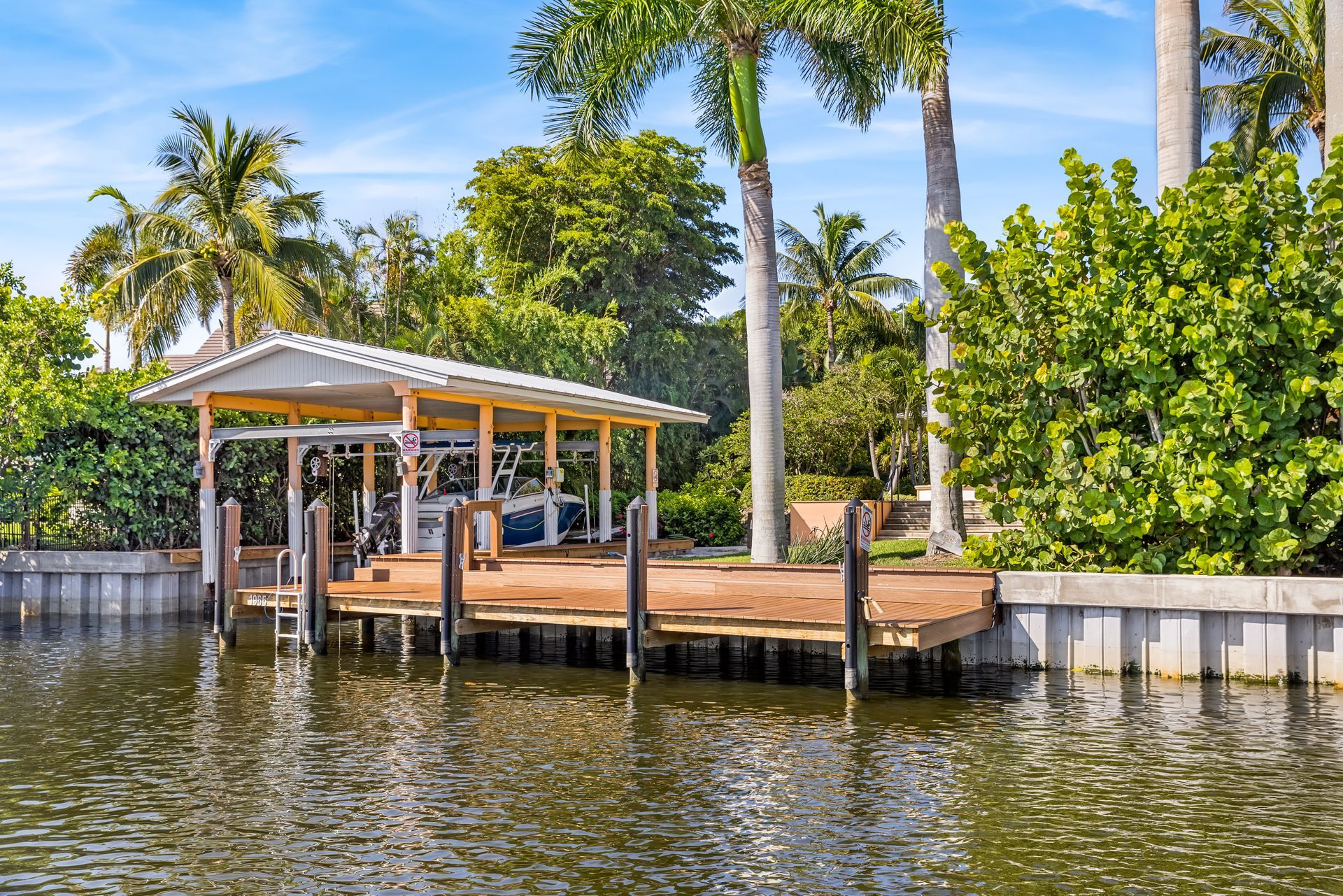
A floating dock rises and falls with the water level. That movement is actually a feature, not a flaw. In areas where tidal variation is significant, or where water levels shift with season or weather, a dock that floats keeps your boat and watercraft accessible no matter what the water is doing beneath you.
Fixed docks, by contrast, are anchored to pilings at a set height. They work well in stable water conditions but can become dangerously high or difficult to use when water levels drop or surge unexpectedly.
Along the coast of Southwest Florida, including areas like Marco Island, Naples Bay, and Keewaydin Island, tidal movement and boat wake are daily realities. A floating dock is often the smarter long-term choice for these environments.
The Main Types of Floating Docks and What Sets Them Apart
Not all floating docks are built from the same materials, and that matters more than most people realize. The body of water you are on, the type of boating you do, and how you plan to use the dock all influence which system will serve you best.
Aluminum Floating Docks
Aluminium frame systems are one of the most popular choices for residential and marina applications. They are lightweight, resistant to corrosion, and hold up well against the salt air and moisture that come with coastal waterfront life. Brands like ShoreMaster are well known in this category, offering modular designs that can be configured to fit different shoreline layouts.
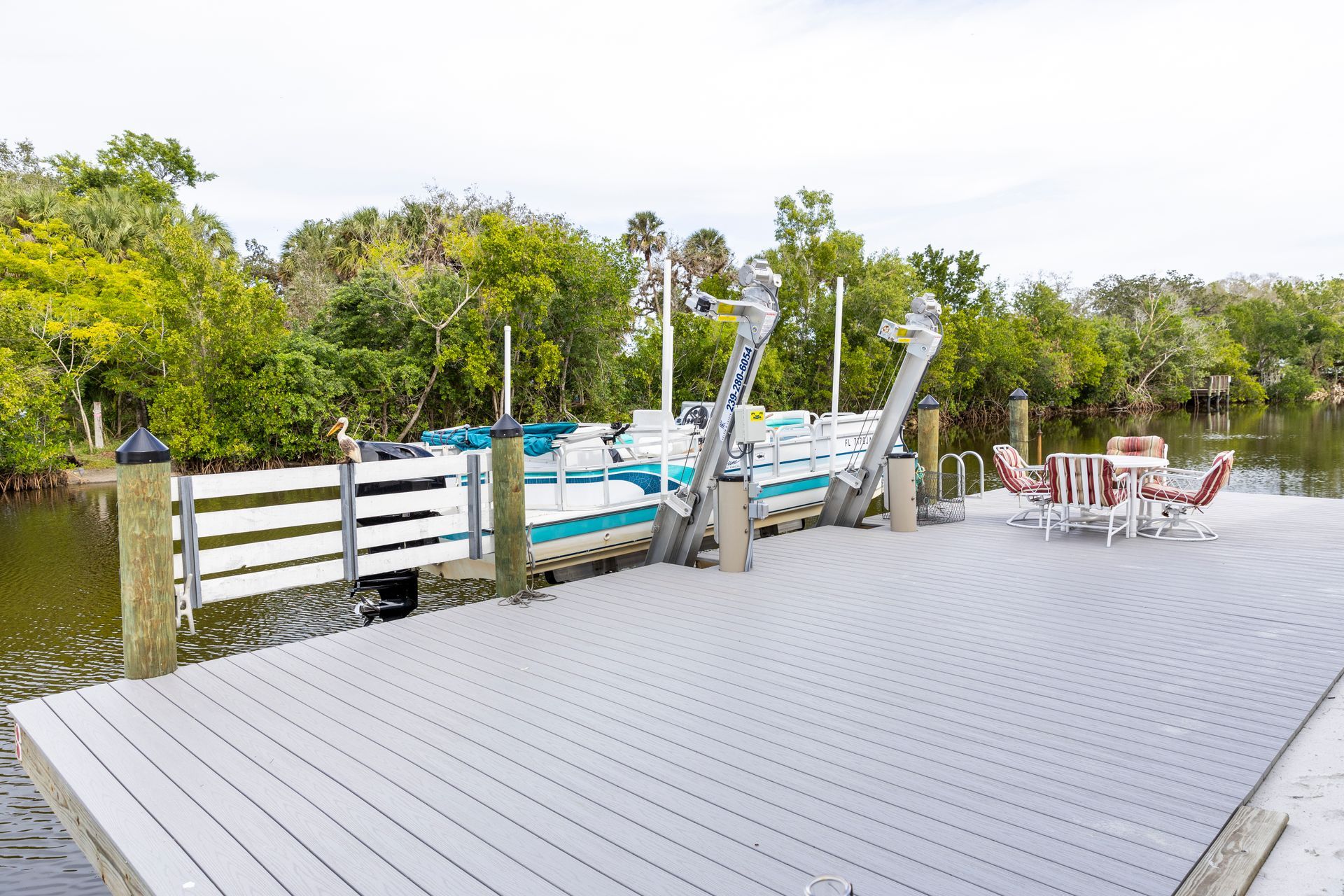
Aluminum docks work well for mooring everything from small kayaks to larger motorized boats. The deck surface is often made from composite decking or treated wood planking, giving you flexibility in how the finished product looks and feels underfoot.
High-Density Polyethylene (HDPE) Dock Systems
High-density polyethylene docks are built from a rugged plastic material that resists UV degradation, water absorption, and biological growth like algae and barnacles.
These systems are modular by design. Individual sections connect together, which means the layout can be changed or expanded over time without starting from scratch. That kind of flexibility is especially useful for properties where the shoreline, vessel size, or storage needs might evolve over the years.
HDPE docks are also notably low maintenance. There is no wood to seal, no metal to check for galvanization wear, and no painting required. For property owners who want a functional dock without constant upkeep, this is a strong option.
Wood and Composite Floating Docks
Traditional wood decking still has a place in floating dock construction, particularly when aesthetics are a priority. A well-built wood deck has a warmth and visual appeal that is hard to replicate. However, raw wood requires ongoing maintenance to hold up against moisture, sun exposure, and marine growth.
Composite decking is a common middle-ground solution. It mimics the look of wood while offering better resistance to the elements. Many property owners pair composite decking with an aluminium or steel frame to get the best of both worlds - the appearance of a natural material with the structural strength of metal construction.
Concrete Floating Docks
Concrete floating docks are typically used in commercial applications, large marinas, or situations where extreme durability is the main priority. They are heavy by nature, which makes them more stable in rougher water conditions, but that same weight limits where and how they can be installed.
A concrete floating dock is not the right choice for every property, but for commercial marine facilities or high-traffic boating areas, they can be a long-lasting solution worth considering.
Steel Frame Floating Docks
Steel frame docks offer serious structural strength. When properly treated through hot-dip galvanization, a steel frame can resist corrosion for many years even in saltwater environments. This makes them a viable option for larger commercial builds or situations where the dock needs to support significant weight loads.
The tradeoff is maintenance. Steel requires more monitoring over time compared to aluminium or HDPE. Without proper protective coating and routine inspection, the ocean environment can shorten the life of a steel structure considerably.
Matching the Dock to the Water
Here is where the real decision-making happens. The type of water your property sits on shapes everything about which dock will work and which one will fail prematurely.
Calm, protected rivers and inland waterways are more forgiving. A modular HDPE system or a basic aluminum floating dock with composite decking can perform well in these conditions with minimal reinforcement.
Open coastal water, tidal rivers, and high-traffic boating areas near a marina require more thought. Wave action, wakes, and tidal force put stress on connection points, pilings, and the dock frame itself. In these environments, you want a system engineered for movement - one with robust anchoring, quality hardware, and materials rated for saltwater exposure.
For properties along Naples Bay, Port Royal, or the waterways around Everglades City, consulting with an
experienced dock builder before selecting a system is not just helpful; it is essential. The wrong dock in the wrong water is an investment that will cost you again much sooner than it should.
What to Think About Before You Decide
Before committing to any floating dock system, it is worth running through a few practical considerations:
- What will you be mooring? A jet ski has very different requirements than a 30-foot motorboat. The dock needs to handle the weight, wake, and access needs of your actual watercraft.
- How much maintenance are you willing to do? Wood and steel demand more attention than aluminium or HDPE.
- What are the permitting requirements? In Collier County, dock construction is subject to local regulations. Working with a builder who knows these requirements saves time and headaches.
- What does the shoreline look like? The slope, depth, and bottom composition of your waterfront affect how the dock is anchored and how it will perform over time.
- Is this residential or commercial? Commercial applications near a marina or boating facility typically require heavier-duty materials and engineering.
Why Experience Matters More Than You Might Think
Choosing a material is only part of the process. How a floating dock is designed, anchored, and built determines whether it will hold up over years of use or start causing problems within a season or two.
Kalvin and Calvin Marine Construction has served Collier County’s waterfront environment for over 40 years. The company's team has hands-on experience with the specific conditions found along this coast - tidal patterns, marine growth, weather events, and the kinds of stress that put docks to the test. That depth of local knowledge is not something you can substitute with a catalog selection or an online quote tool.
Whether you are building a new dock from the ground up or replacing an aging system, having a builder who understands the water you are on makes the entire process more straightforward and the outcome more reliable.
Choosing the Right Floating Dock for Your Waterfront
The right floating dock is not just about material or price. It is about matching the design and construction to the specific body of water you are working with. If you are ready to move forward and want guidance tailored to your Collier County waterfront, reach out to Kalvin and Calvin Marine Construction directly at (239) 280-6054 to talk through your options.
For property owners starting to explore what dock building involves, learning more about the full dock building process is a practical next step before making any decisions.