Boat Lift Types Explained: How to Match One to Your Dock
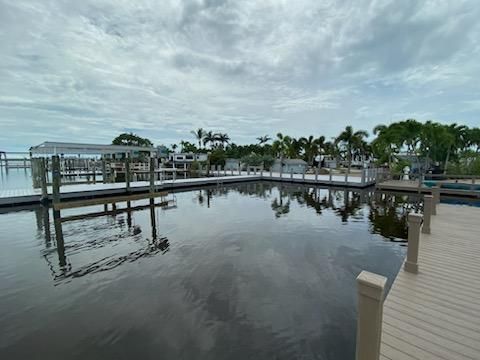
If you own a boat in Collier County, you already know the waterfront here is not a one-size-fits-all situation. The waterways around Naples Bay, Marco Island, and the Gulf Coast vary dramatically in depth, tidal range, and bottom composition. What works beautifully on a canal off Port Royal might be completely wrong for a shallow-water dock near Everglades City.
That is why choosing the right boat lift type matters more than most boaters realize. The wrong lift does not just inconvenience you - it can damage your hull, your dock, and your wallet over time.
This guide is here to help you understand your options clearly, so you can make a decision that actually fits your dock, your watercraft, and your waterway.
Why Your Dock Type Determines Everything
Before you start browsing boat lift brands or comparing horsepower ratings, you need to look at what you are working with structurally. Your dock is the foundation of this decision.
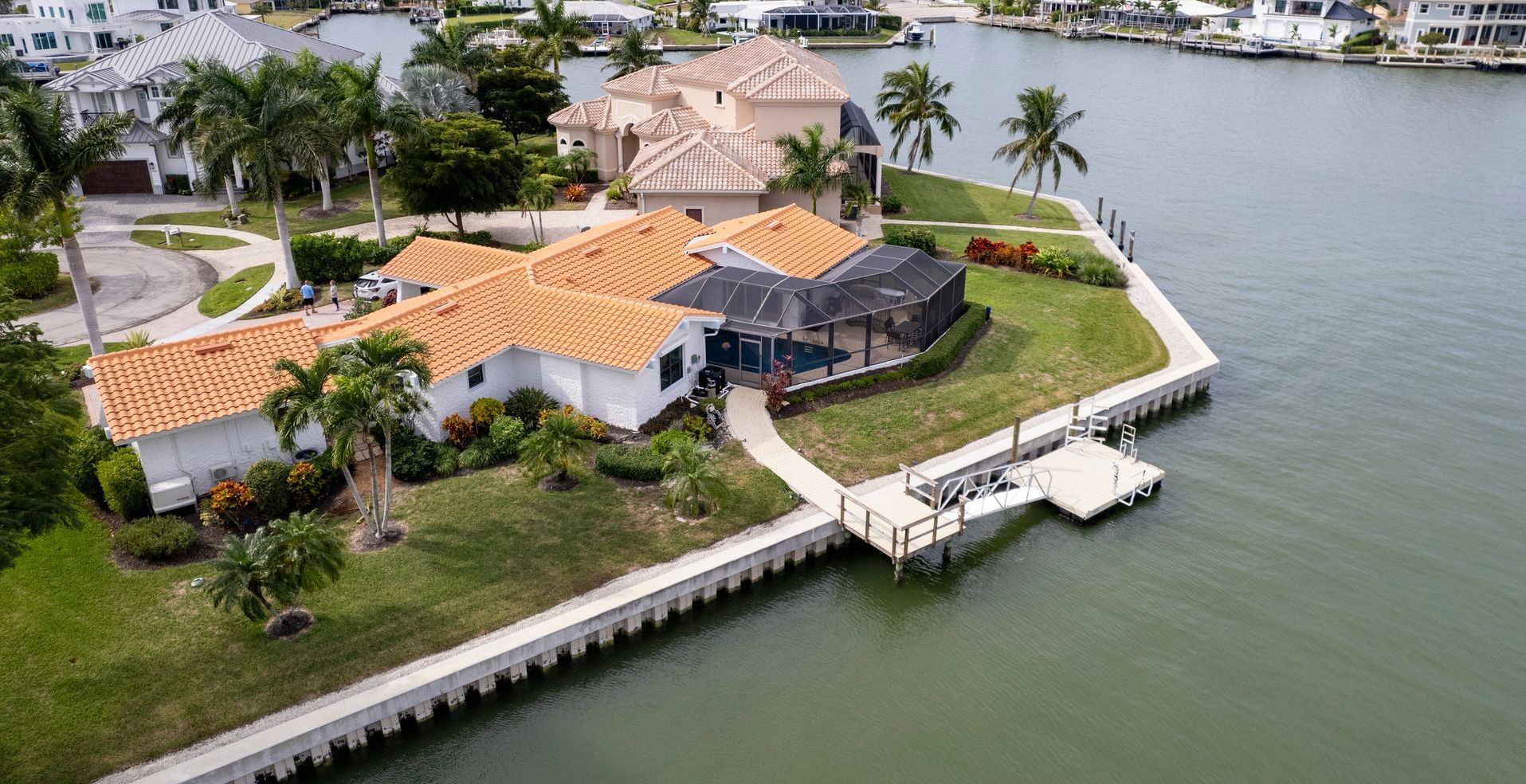
A floating dock behaves differently than a fixed piling dock. A dock built over a deep coastal canal has different load requirements than one sitting above a shallow tidal flat. The seabed beneath your dock, the depth at mean low water, and the spacing between your pilings all feed directly into which lift types are even viable.
Get this step wrong, and no amount of fancy hydraulics or engineering will save you from a poor installation.
Common Boat Lift Types and Where They Work Best
Piling-Mounted Boat Lifts
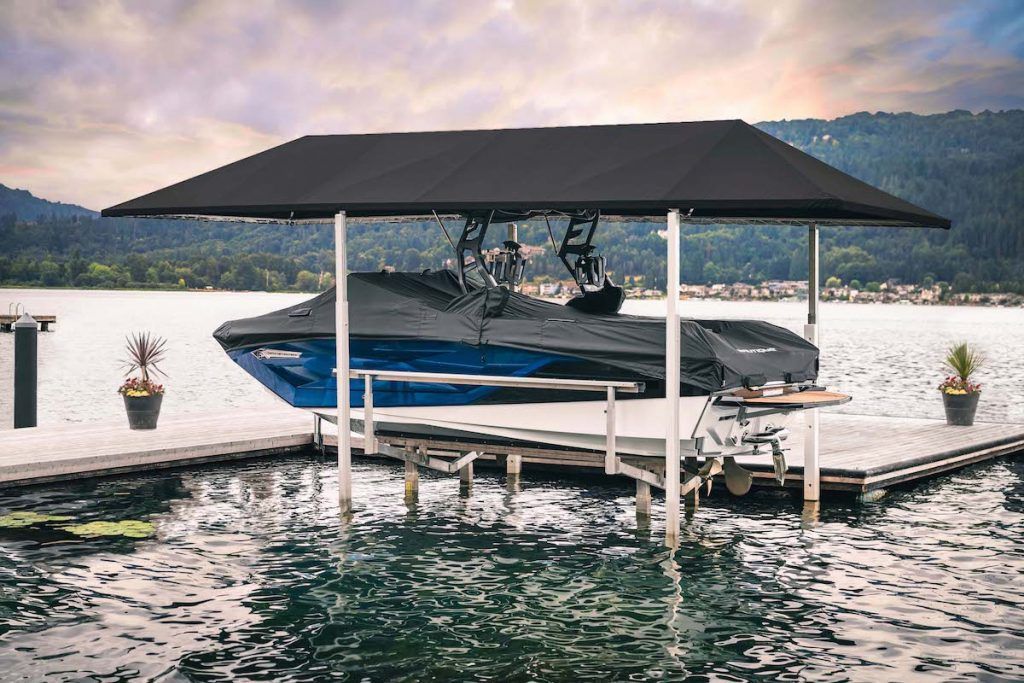
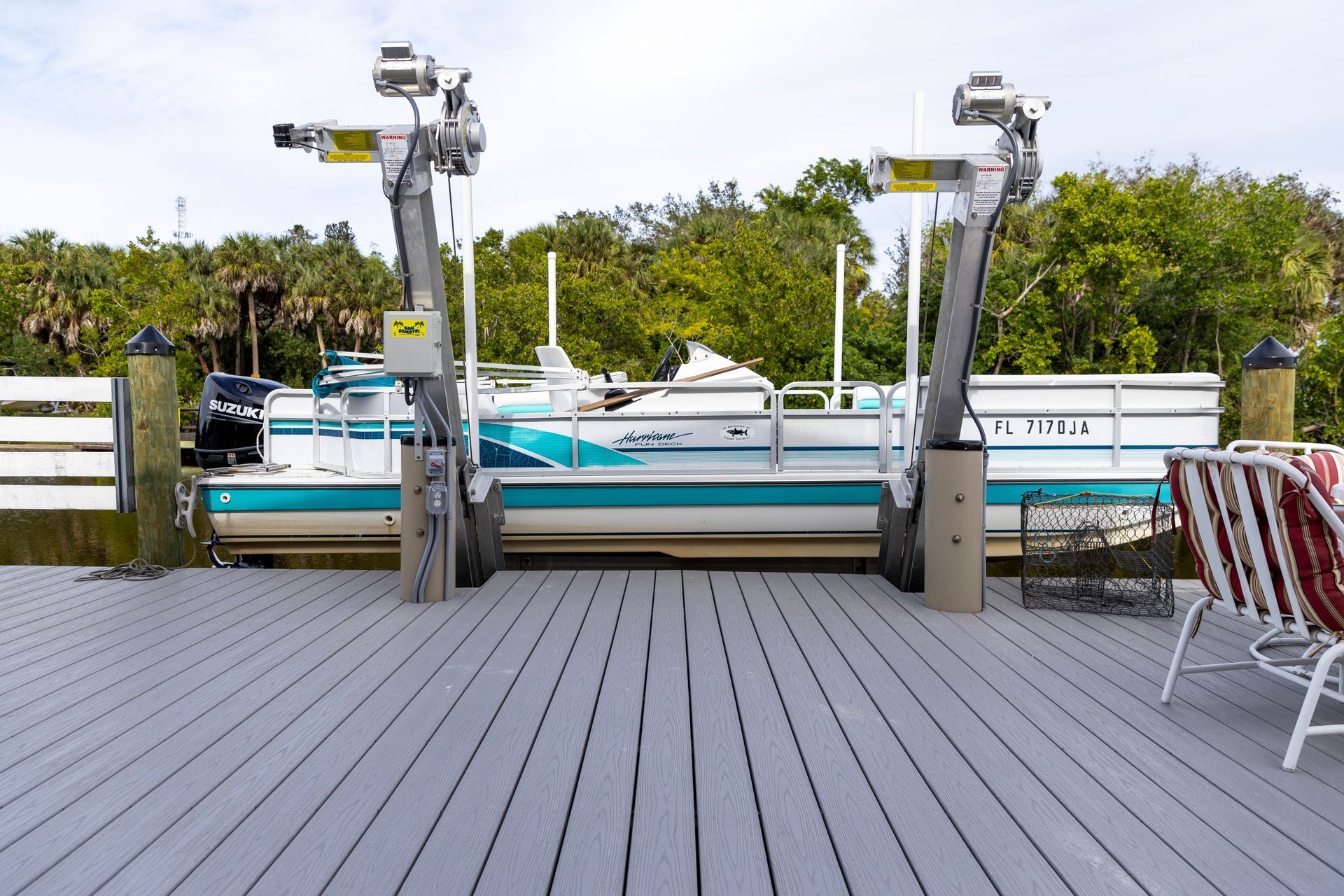
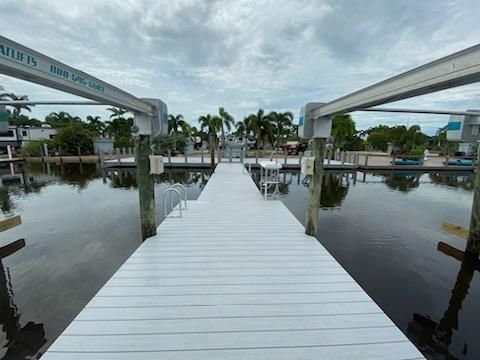
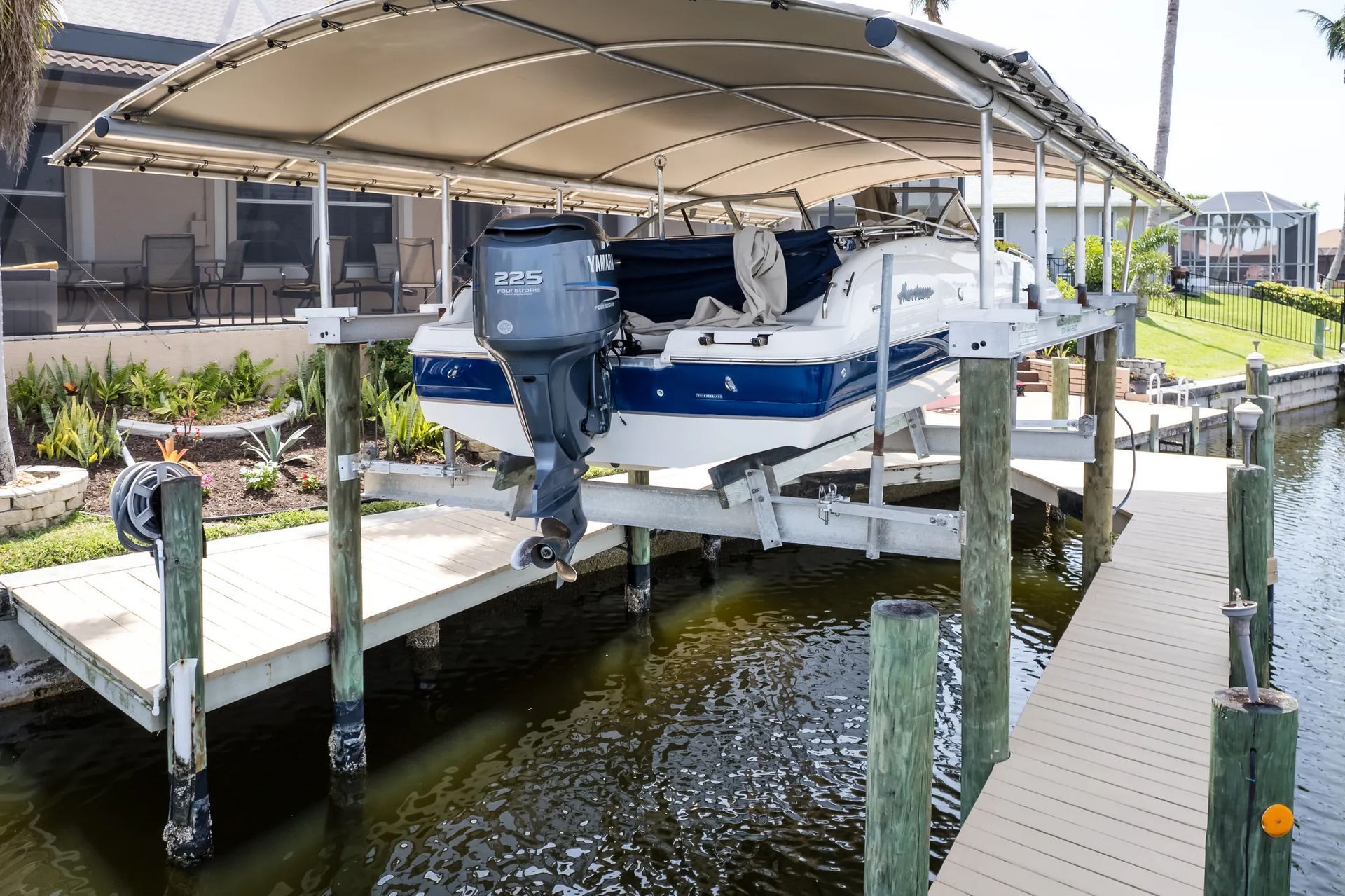
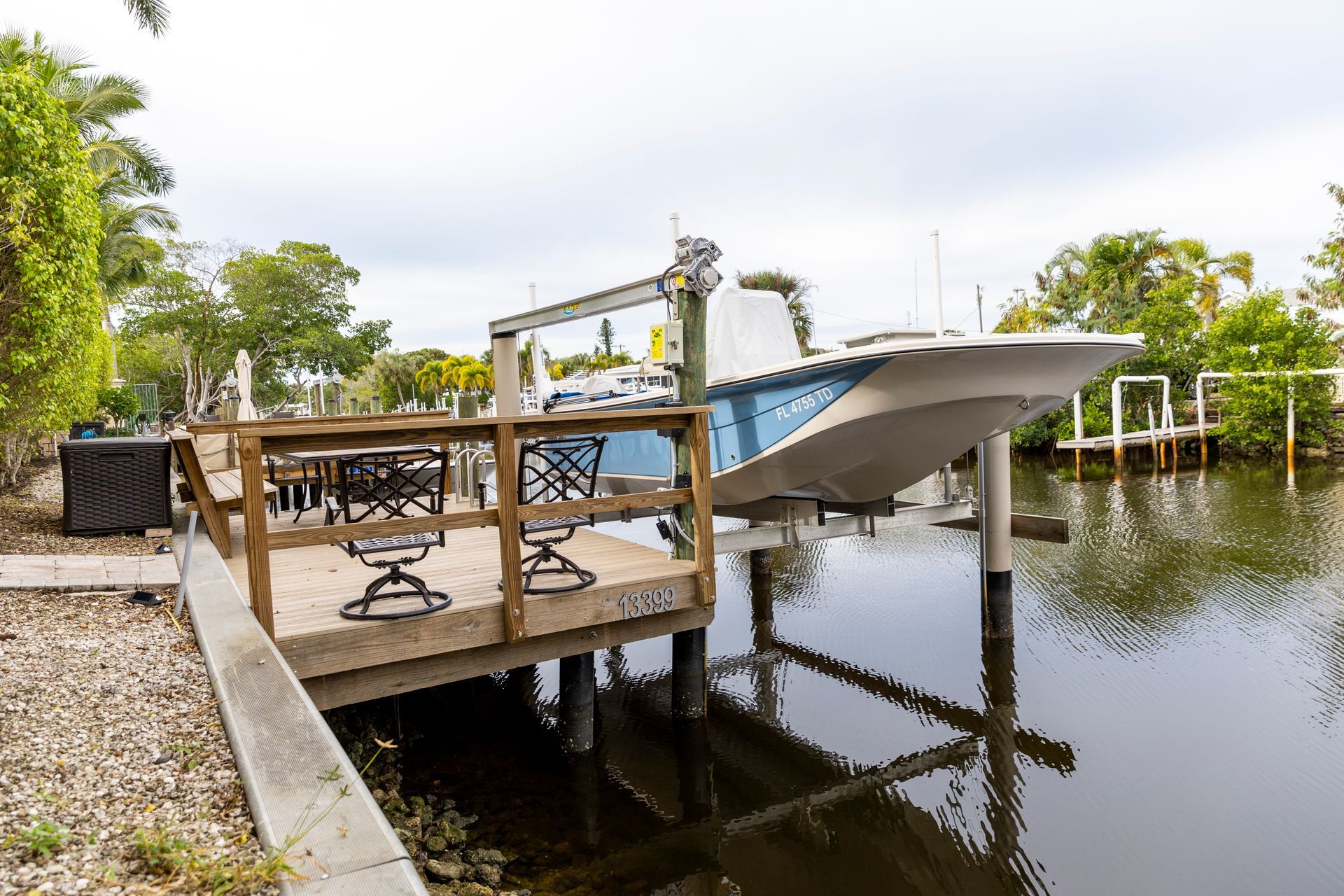
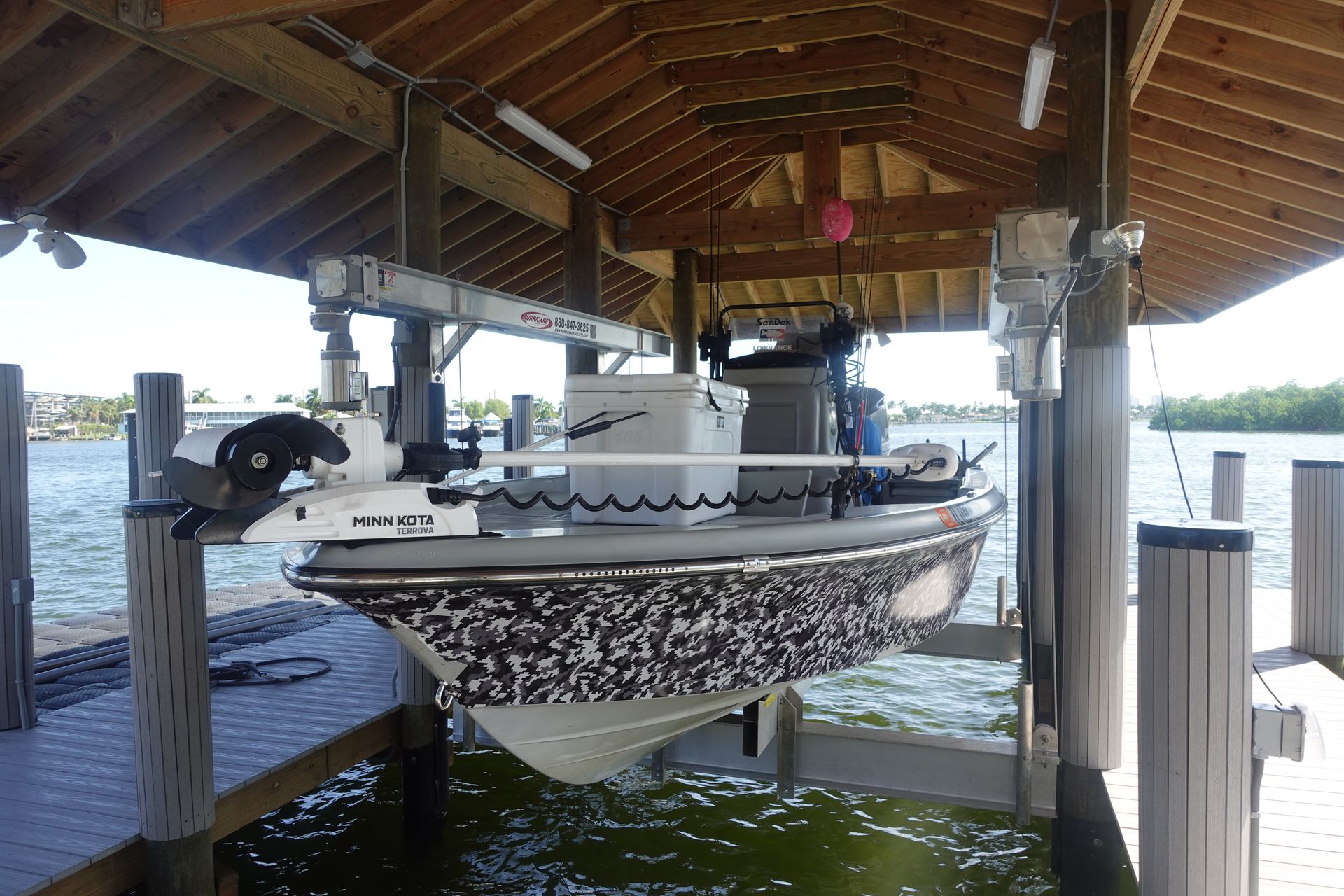
This is the most common lift type you will see along Southwest Florida's waterways. A piling-mounted lift attaches directly to the pilings of your existing dock structure or to dedicated lift pilings installed nearby. The boat sits in a cradle that rises and falls using a motor-driven hoist or a hydraulic system.
These lifts are reliable, relatively straightforward to maintain, and work well in canals and coastal areas with moderate to good water depth. They are a strong fit for standard powerboats, center consoles, and mid-size vessels that stay in the water regularly.
The key consideration here is piling condition and spacing. Older or undersized pilings may not handle the load of a fully loaded boat, especially if you factor in a heavy outboard engine setup. A proper assessment of your existing dock structure before installation is not optional - it is essential.
Cantilever Lifts
A cantilever lift uses a beam-based lever system to raise and lower the watercraft without the boat needing to float over a submerged cradle. Instead, the lift arms extend out and lift the hull clear of the waterline from the side.
These are particularly useful in very shallow areas where there simply is not enough water depth to float a cradle beneath the boat. If your dock sits in an area with significant tidal variation - which is common along much of Collier County's coastline - a cantilever design can be a practical solution where other lift types struggle.
They tend to work best for smaller vessels and personal watercraft like a jet ski. For larger boats, you will need to confirm that the dock structure can handle the cantilever forces involved.
Hydraulic Boat Lifts
Hydraulic lifts use fluid pressure to raise and lower a platform smoothly and with less mechanical strain than cable-driven systems. They are known for being quiet, reliable, and capable of handling heavier loads.
The trade-off is complexity. A hydraulic system has more components that require maintenance, and if something goes wrong, the repair is more technical than fixing a basic electric hoist. That said, for larger vessels or boaters who use their lift frequently, the smooth operation and lifting capacity of a hydraulic system can be worth it.
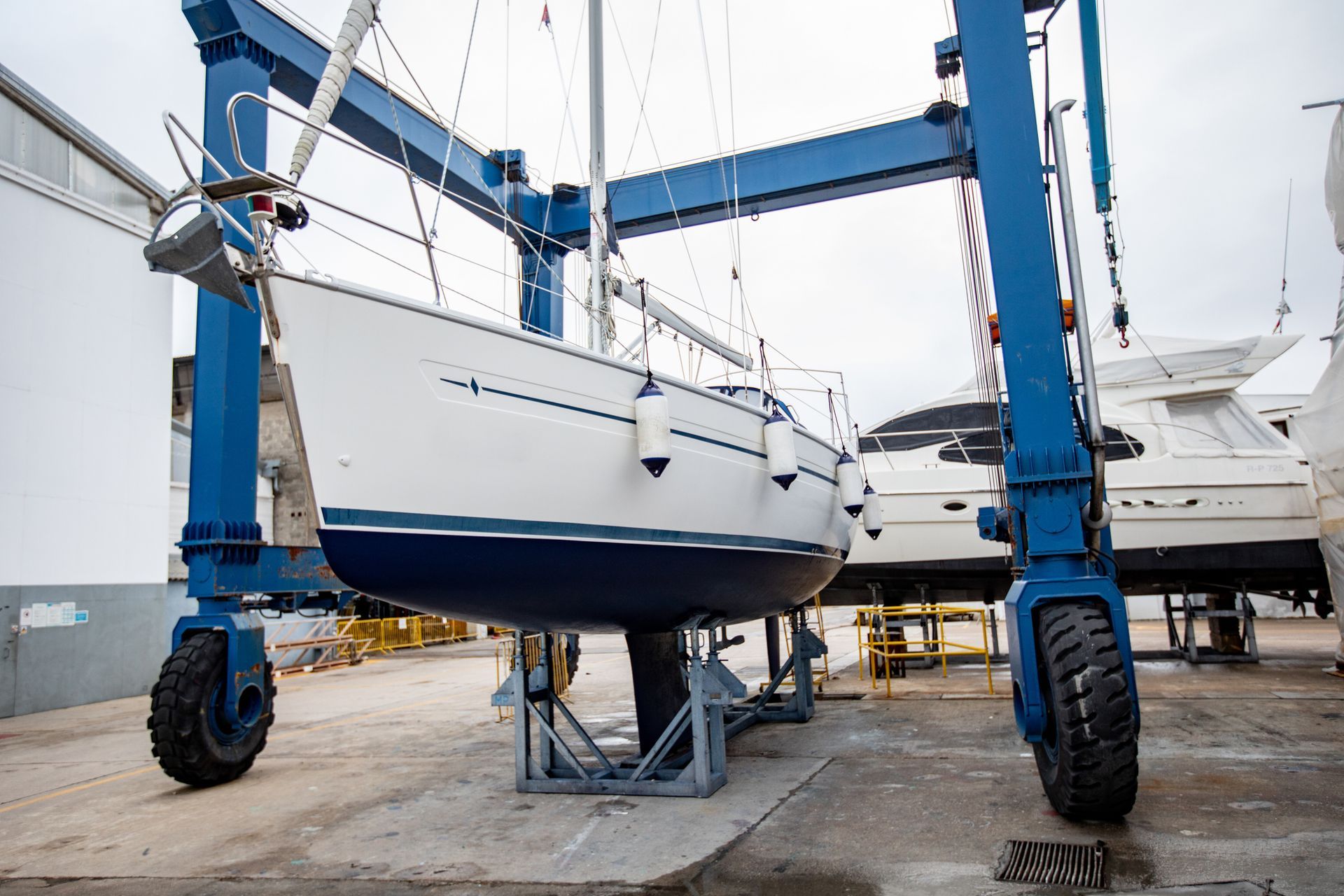
These are common in marina environments and on private docks with larger, heavier boats that need consistent, reliable lift force.
Elevator Lifts
An elevator lift is essentially a vertical platform that goes straight up and down, similar in concept to an elevator. The boat rides onto the platform, and the entire platform rises, keeping the hull level throughout the lift.
These are a good match for wider beam vessels and boats that need a stable, even lift without stressing a single point of the hull. Elevator lifts typically require sturdy dock infrastructure and enough water depth for the platform to operate properly.
They are not the most common residential choice, but for the right vessel and dock configuration, they offer excellent stability and hull protection.
Floating Boat Lifts
Floating boat lifts use buoyancy - typically air-filled tanks or bladders - to lift the vessel rather than mechanical power. You drive the boat over the submerged platform, and then the system fills with air, displacing water and rising with the boat on top.
More modern brands have made floating lifts popular in locations where traditional dock structures do not exist or where bottom anchoring is restricted. They are also a common sight on lakes and areas where the seabed composition makes piling installation difficult.
In Collier County's coastal and estuarine environment, floating lifts can work well in the right spots, particularly in areas with soft bottoms or protected waterways where there is no significant wave action. They require minimal dock infrastructure, which makes them attractive for simpler setups.
The main consideration is that they can be less stable in areas with boat wakes or tidal currents. They are also best suited for smaller to mid-size vessels rather than large offshore boats.
Dry Dock and Overhead Storage Systems
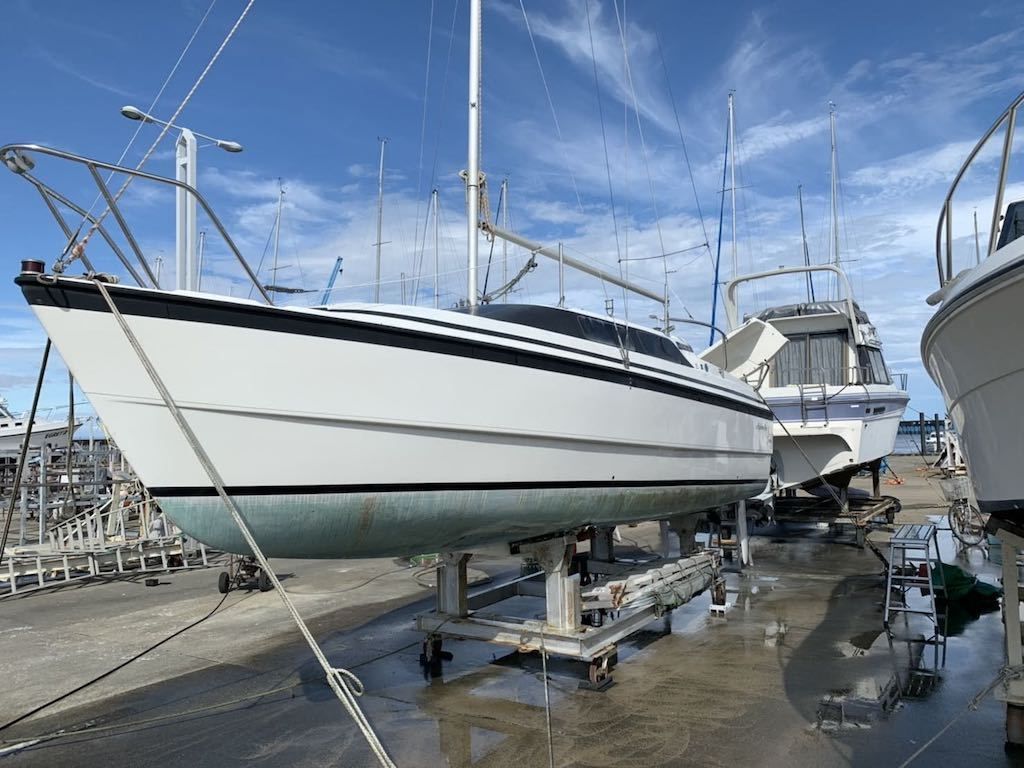
While not a traditional in-water lift, dry dock systems and overhead storage racks are worth mentioning for smaller watercraft. If you have a smaller skiff, kayak, or personal watercraft that does not need to stay at the water's edge, an overhead hoist or rack system at your dock can protect the hull from the elements without requiring a full lift installation.
These are cost-effective, simple, and low-maintenance. For boaters in Collier County who use their smaller vessels less frequently, it is a practical option.
Matching Lift Type to Your Specific Dock Situation
Let's bring this together with a simple framework. The right lift for you depends on three core factors: water depth at your dock, the structural condition of your dock, and the size and weight of your boat.
If you have deep, stable water and a solid piling dock, a piling-mounted or hydraulic lift is probably your most straightforward path. If you are dealing with shallow water and tidal variation, a cantilever or floating lift deserves a closer look. If your dock infrastructure is older or not originally designed to support a lift, you may need structural upgrades before any lift type makes sense.
One thing that catches a lot of Collier County boaters off guard is the relationship between
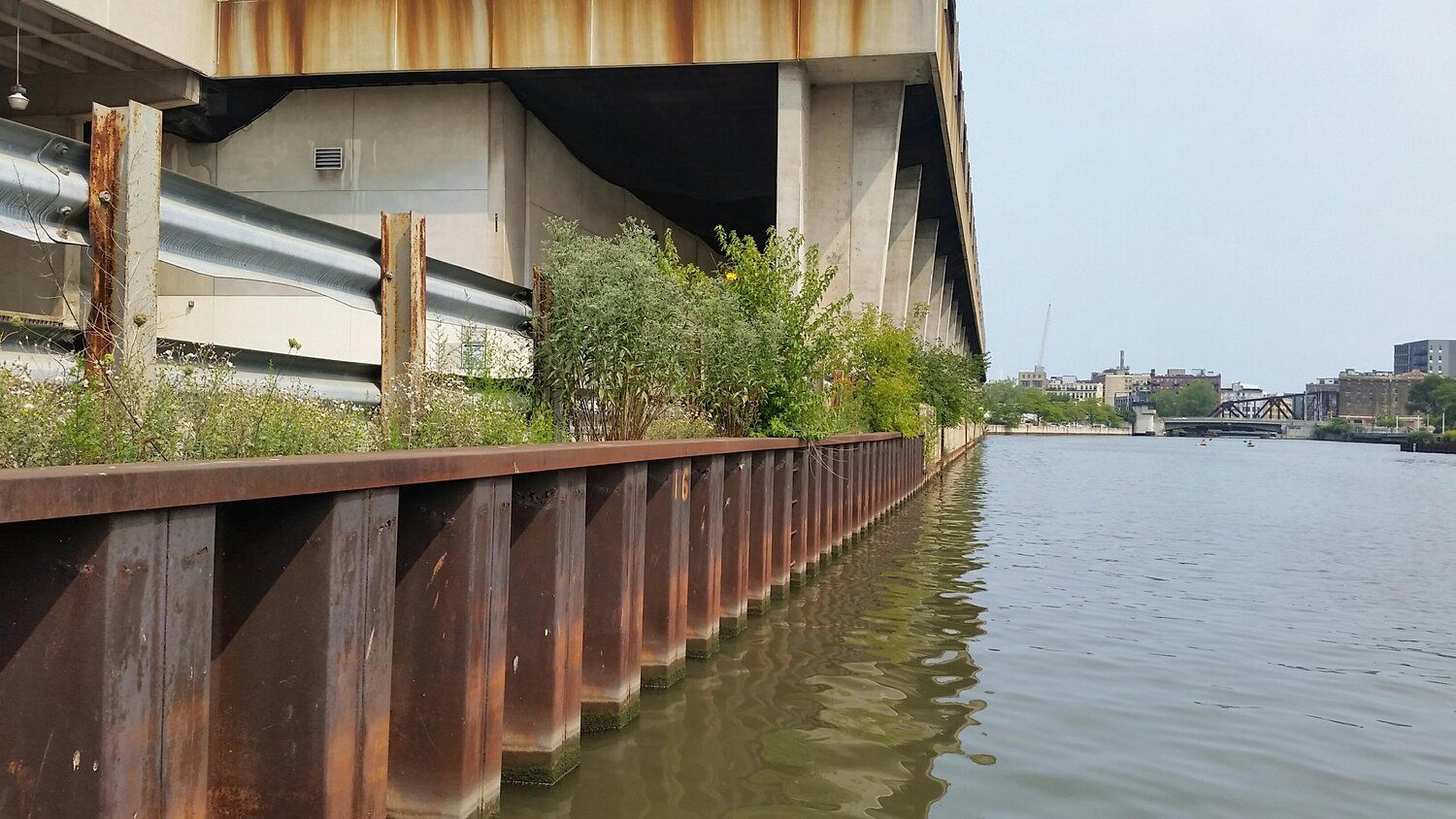
seawall proximity and lift placement. If your dock runs parallel to a seawall, the lift placement needs to account for swell movement and how it affects both the lift and the wall over time. Getting this wrong can accelerate wear on both structures.
What Happens When You Skip the Assessment
It is tempting to pick a lift based on price or what a neighbor has, but local waterway conditions here are specific enough that shortcuts tend to be expensive. A lift installed without a proper review of depth, dock structure, and vessel weight can fail prematurely, require costly modifications, or cause damage to your boat during routine use.
Boating is supposed to be enjoyable. A poorly matched lift makes it a hassle every time you leave the dock.
Working With Someone Who Knows These Waters
Forty years of experience along Southwest Florida's coastline teaches you things that no manual covers. The team at Kalvin and Calvin Marine Construction has spent decades working in the specific waterways around Collier County - the canals, the coastal margins, the tidal flats, and the bay systems - and that local knowledge shapes every recommendation they make.
Whether you are building a new dock from scratch or upgrading an existing structure to support a lift, the starting point is always an honest look at what you are working with. To get a clearer picture of what
dock construction or modification might involve for your property, explore our
dock building services for more detail.
You can also
reach the team directly at
(239) 280-6054 if your situation calls for a site visit or a specific quote.
Match the Right Boat Lift Type to Your Dock
No two docks along Collier County's waterfront are exactly alike, and the same is true for boat lifts. Matching the right lift type to your dock, your vessel, and your waterway is the difference between a system that works every time and one that causes constant headaches. Take the time to assess your setup honestly, consider the options outlined here, and lean on professionals who know these local waters before making a final decision.