Seawall Maintenance: How to Keep Your Shoreline Stable
You already know that waterfront property in Collier County comes with a cost. But here is a cost that catches a lot of homeowners off guard: the price of ignoring routine seawall maintenance until the wall fails completely.
It happens more often than you would think. A small crack goes unaddressed. Water finds its way behind the wall. Soil erosion quietly does its work. And before long, what started as a minor repair becomes a full replacement.
Why Seawalls Deteriorate Faster Than Most People Expect
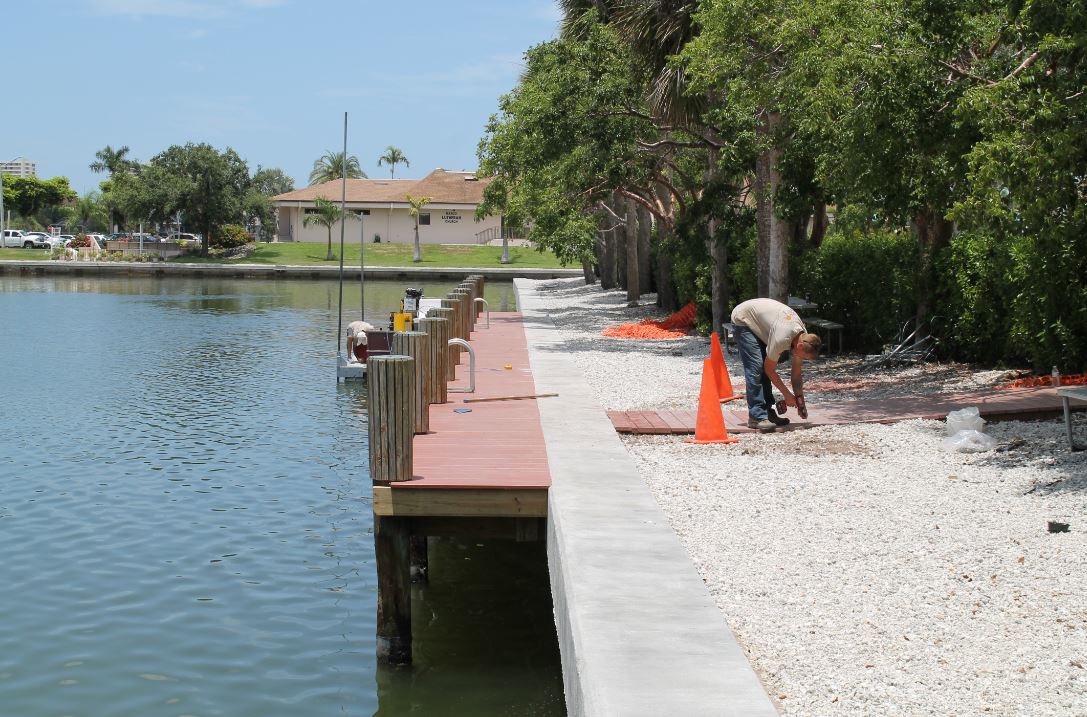
A seawall is under constant pressure. Tidal movement, wave action, and shifting soil put stress on the structure every single day. In Southwest Florida, the combination of saltwater exposure and sandy soil makes that wear happen faster.
Concrete seawalls are especially vulnerable to cracking over time. Once water penetrates those cracks, it begins eroding the soil behind the wall. That loss of soil support weakens the structural integrity of the entire system, and the wall can begin to lean or shift.
The Role of Weep Holes and Drainage
Weep holes are small openings designed to relieve hydrostatic pressure behind the wall. When they become clogged - with debris, roots, or sediment - water pressure builds up and pushes against the wall from behind. This is one of the most common causes of premature seawall failure.
Jet filters and proper drainage systems help keep this pressure balanced. If these systems are not functioning correctly, even a well-built wall can deteriorate over time.
What Happens When You Skip Inspections
Skipping a seawall inspection might seem like a way to save money. In reality, it is the opposite.
An inspection looks at the full picture: the face of the wall, the cap, the tiebacks anchoring the structure, weep hole condition, and signs of soil movement behind the panel. Catching a failing tieback early, for example, costs a fraction of what it costs to rebuild a wall section after it has shifted.
Common Warning Signs That Should Not Be Ignored
- Visible cracks running horizontally or diagonally across the wall face
- Soil erosion or sinkholes forming behind or near the wall
- The wall leaning noticeably toward the water
- Water seeping through the wall at unusual points
- Spalling or deteriorating concrete along the cap or panel
If you see any of these on your property, the time to act is now - not next season.
Seawall Maintenance Is Erosion Control
Think of seawall maintenance as active erosion control. The wall exists to hold soil in place and protect your property from water intrusion. When that wall is compromised, soil erosion accelerates, and so does property damage.
Some repairs involve polymer injection behind the wall to stabilize soil and fill voids before they become larger failures. This is far less disruptive and far less expensive than excavating and rebuilding. But it only works when the problem is caught early enough.
The Real Cost of Waiting
A routine inspection in Collier County costs a fraction of what a new seawall costs. A targeted repair costs far less than a full replacement. Yet many property owners wait until visible failure forces their hand - and by then, the options are limited and the price is significant.
Replacement means new panels, new tiebacks, new concrete work, and in many cases, permitting and engineering fees on top of that. It is a significant project, not a weekend fix.
Maintenance, on the other hand, keeps that outcome from becoming your reality.
Protect Your Seawall With Routine Maintenance
Seawall problems in Collier County rarely announce themselves loudly. They build quietly, behind the wall, under the soil, out of plain sight. Routine maintenance and regular inspections are how you stay ahead of them. If it has been a while since your seawall was looked at - or if you have noticed any of the warning signs above - reach out to the
team at Kalvin and Calvin Marine Construction. Call
(239) 280-6054 to schedule a
seawall inspection before a manageable repair turns into something far more serious.