Cantilever Vs Vertical Boat Lift: Why Depth Decides It
If you've been trying to figure out whether a cantilever or vertical boat lift makes more sense for your dock, you're not alone. This is one of the most common questions waterfront property owners in Collier County face, and the answer usually comes down to one thing: water depth.
Both systems do the same basic job - they keep your watercraft out of the water when it's not in use. But the way they do it, and where they work best, is very different.
What Is a Cantilever Boat Lift?
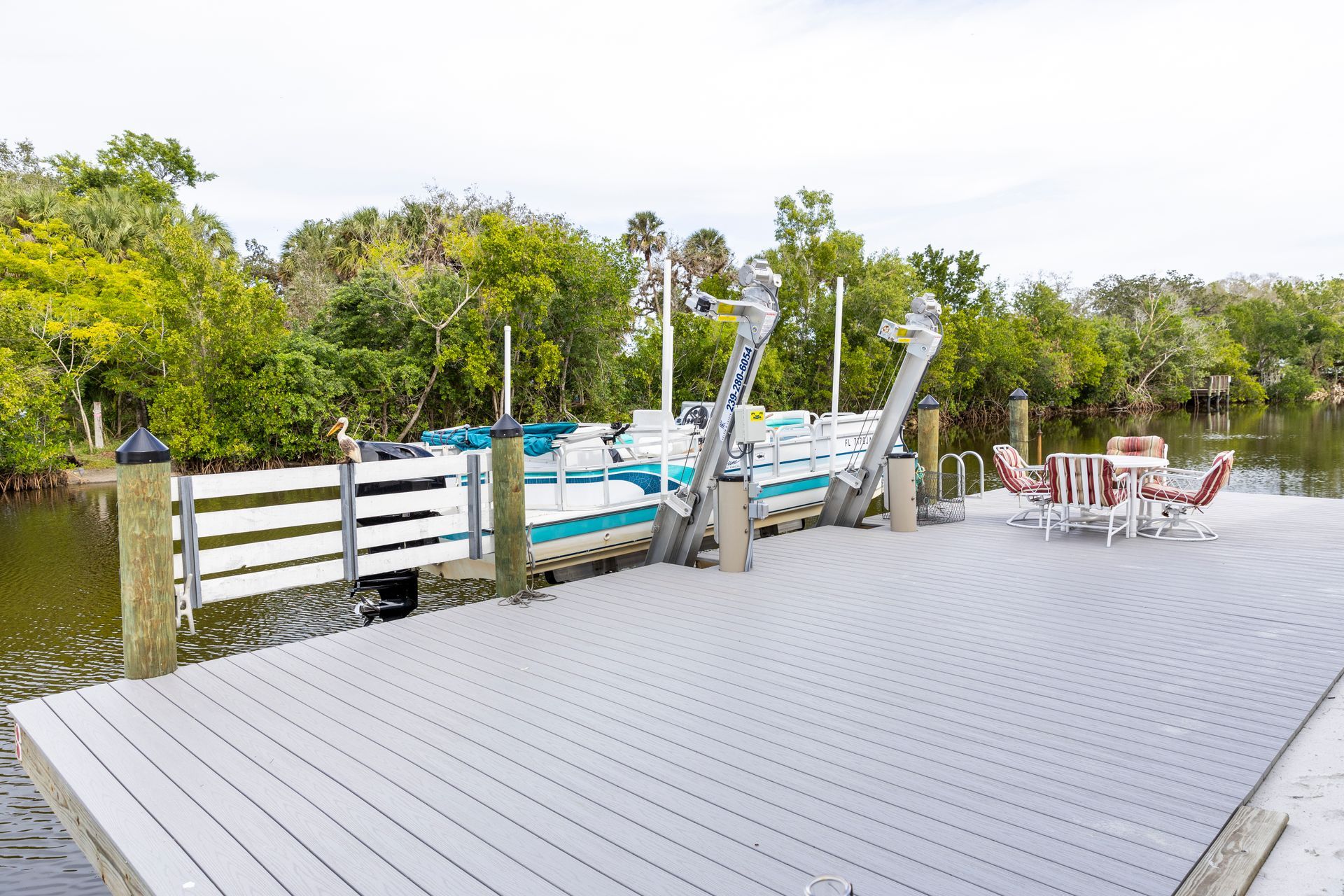
A cantilever boat lift works on a lever-and-pivot system. As the name suggests, it uses the cantilever principle - where a beam is anchored at one point and extends outward without additional support underneath. Instead of lifting straight up, it angles the boat cradle in and out of the water.
Cantilever lifts are mechanically simpler. There are no hydraulics involved, and the system typically uses a pulley or cable-driven mechanism to raise and lower the boat. Because of this, they tend to require less maintenance over time and are often more resistant to corrosion, which matters a lot in Southwest Florida's saltwater environment.
These lifts are best suited for shallow water - generally 3 to 6 feet of depth. If your dock sits in water shallower than that range, a cantilever design is usually the smarter call.
What Is a Vertical Boat Lift?
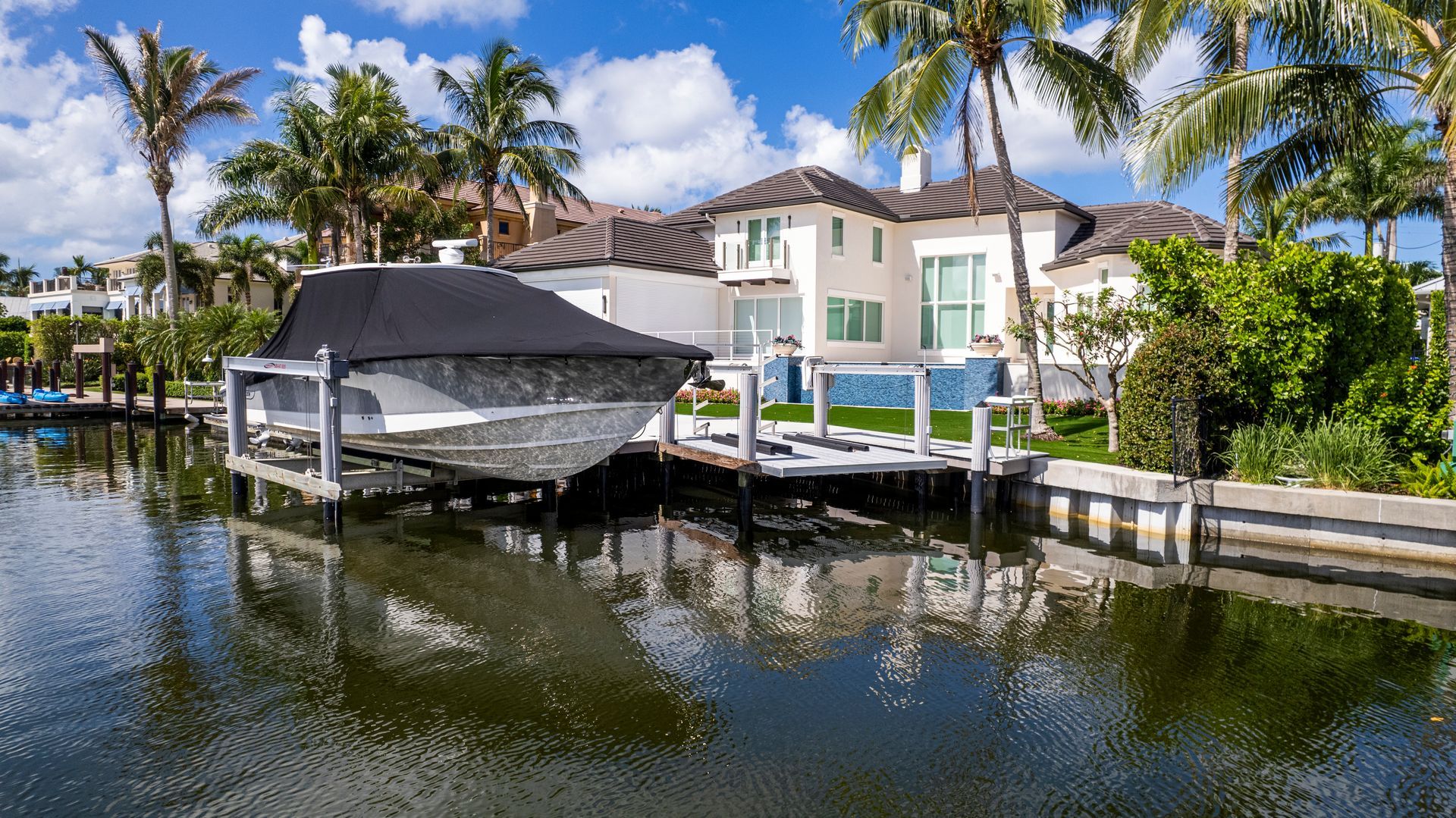
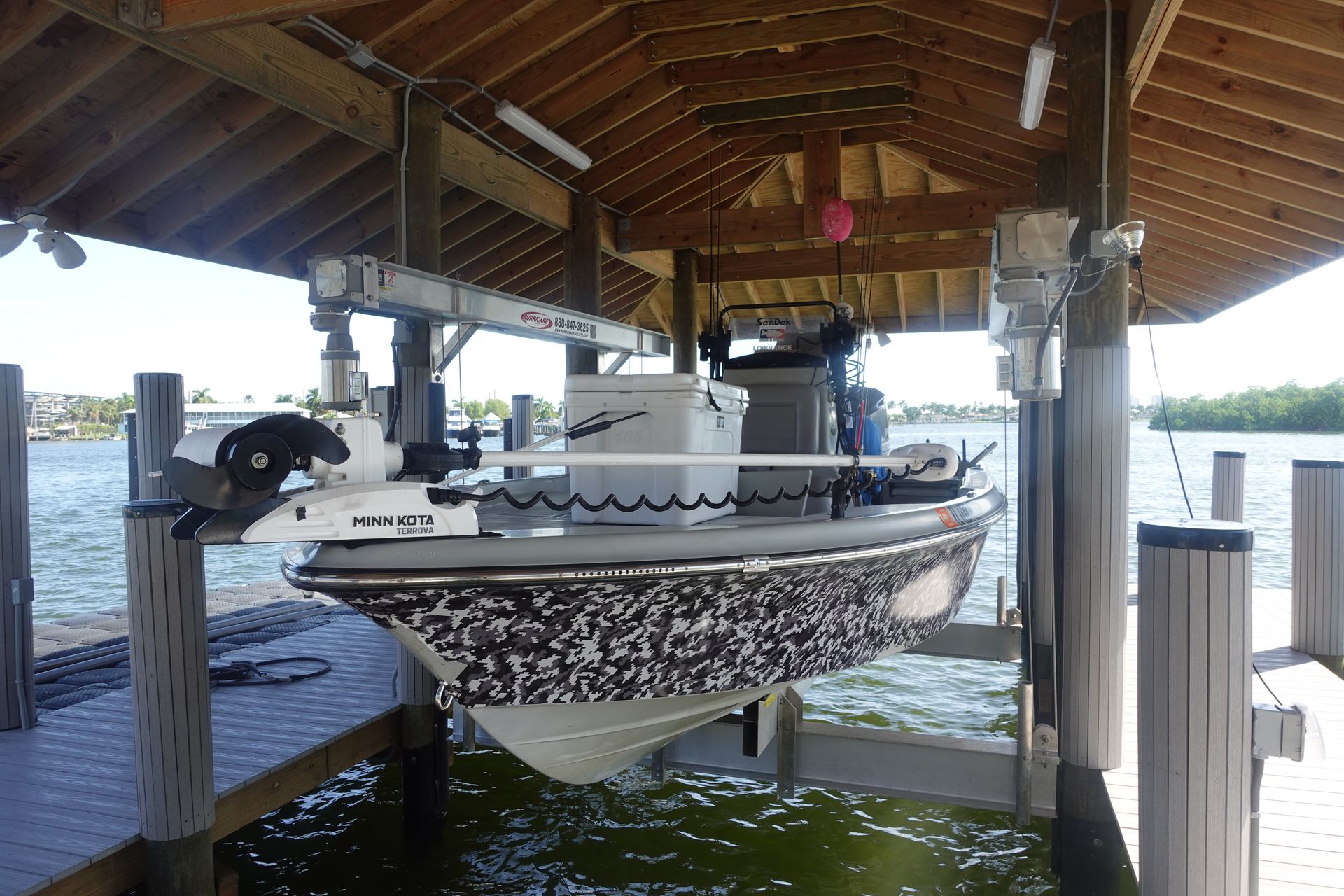
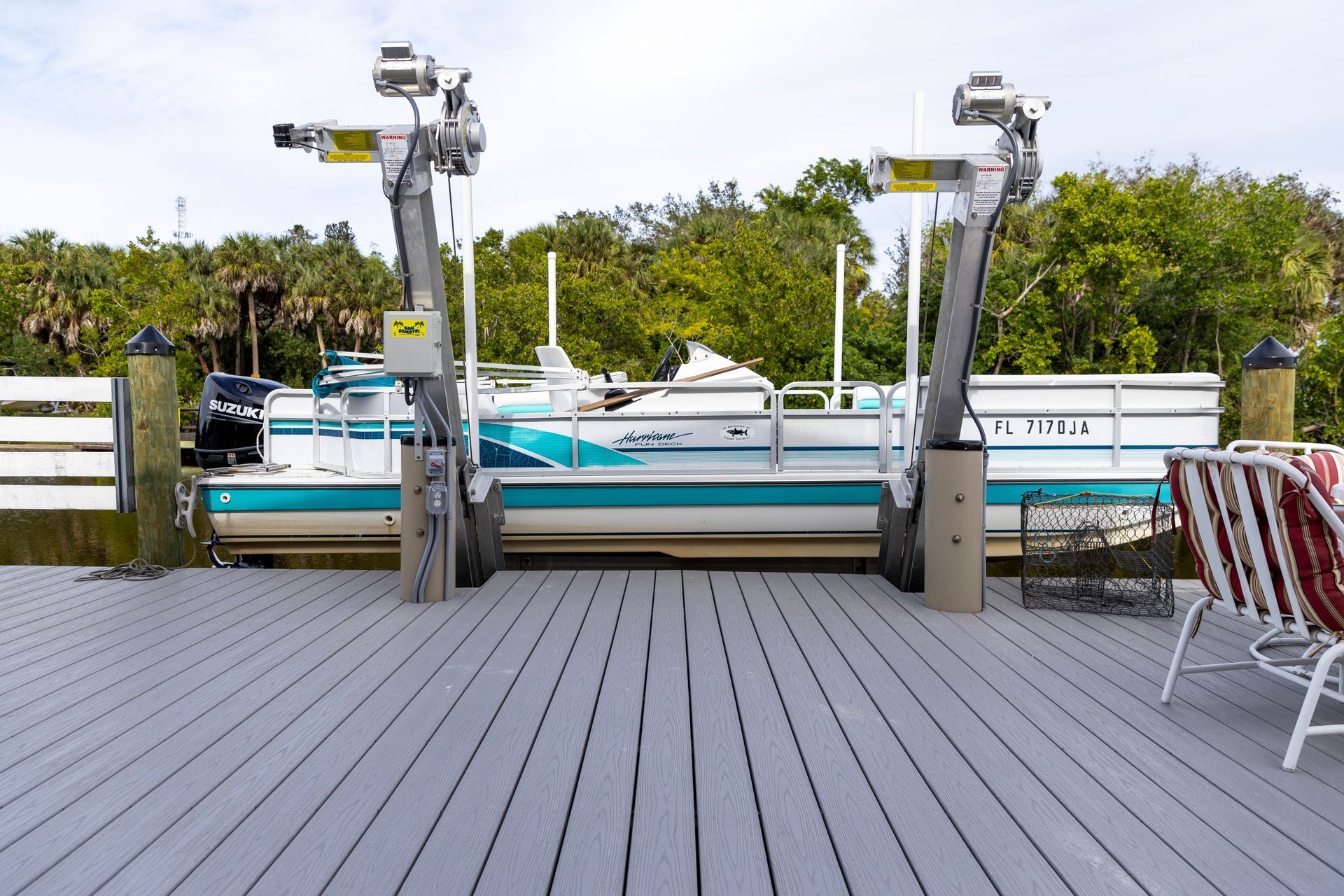
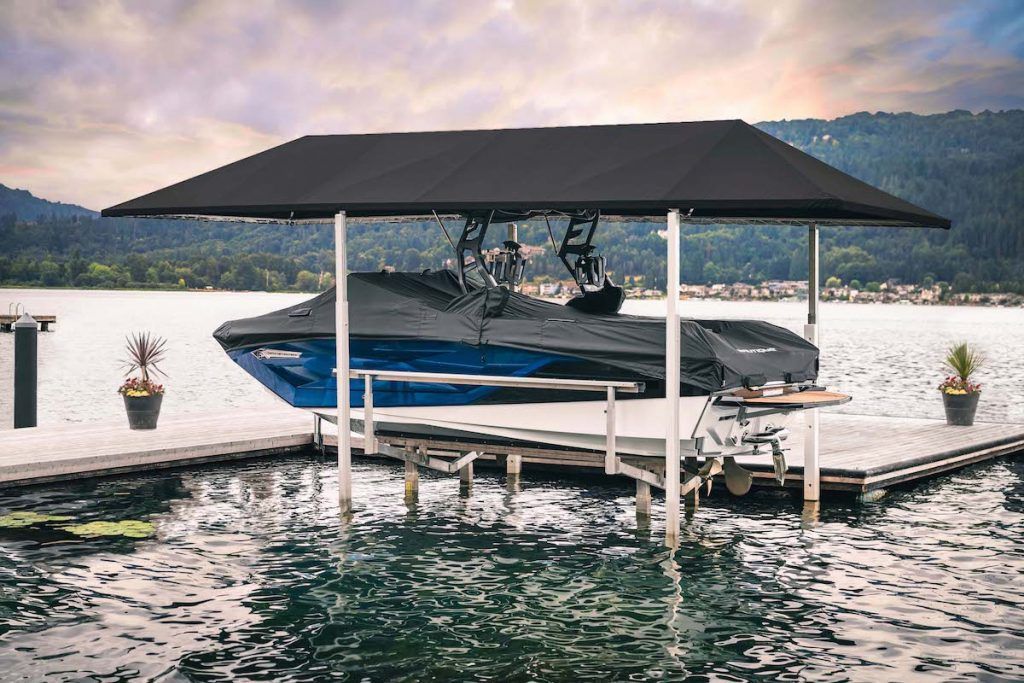
A vertical boat lift, sometimes called a boat elevator, raises the watercraft straight up rather than angling it. The boat sits on a submerged cradle, and the system lifts it directly out of the water in a vertical motion.
Vertical lifts perform better in deeper water - typically anywhere from 6 feet and beyond. designed to handle heavier boats, including larger pontoon boat models and other high-end brands have built strong reputations with vertical systems capacity watercraft.
Some vertical lift systems rely on hydraulics for smooth, reliable operation. Others use electric motors with cable-and-pulley setups. Either way, they're built for situations where a cantilever simply can't do the job.
Why Water Depth Is the Deciding Factor
Here's the core issue: a cantilever lift needs enough water to submerge the cradle during loading and unloading, but not so much that the lever arm can't function properly. In water deeper than 6 feet, the geometry stops working in your favor.
A vertical lift, on the other hand, is engineered to function in deeper water. The straight-up-and-down motion doesn't rely on water depth the same way a cantilever does. As depth increases, vertical systems remain effective while cantilever designs become impractical.
If your water depth sits right around 6 feet, you're in a gray zone. That's when other factors - like boat size, budget, and dock configuration - start shaping the decision.
Other Factors That Matter Beyond Depth
Boat Size and Weight Capacity
Cantilever lifts are generally rated for lighter boats. If you're working with a smaller vessel, a cantilever may handle the load comfortably. For heavier boats, especially those approaching or exceeding 6,000 pounds (sometimes referred to as a 6000-class lift), vertical systems are more appropriate.
Maintenance and Corrosion Resistance
In a saltwater environment like Collier County's coastal waterways, corrosion is a constant concern. Cantilever lifts, with fewer moving parts and no hydraulic components, often hold up better in these conditions over time. Vertical lifts with hydraulics may need more consistent maintenance to stay in good working order.
Dock Setup and Space
Your existing dock structure also plays a role. Cantilever lifts typically need adequate space alongside the dock for the arm to pivot. Vertical systems need overhead clearance for the lift mechanism to operate. Neither is universally better - it depends on how your dock is positioned and configured.
Cost and Long-Term Value
Budget is always part of the conversation. Cantilever lifts are usually less expensive upfront. Vertical lifts, especially those with hydraulic systems or higher capacity ratings, tend to cost more. However, the right lift for your depth and boat size will always save you money in the long run by reducing wear on the vessel and minimizing repairs.
What About Lake vs. Coastal Environments?
This is worth a quick note. Cantilever lifts are common on lake docks across the country because lake water tends to be shallower and calmer. Coastal and tidal environments - which Collier County has in abundance - often require vertical systems simply because of variable water levels and greater depth.
Tidal fluctuation adds another layer to the depth equation. What reads as 4 feet at low tide could be closer to 6 or 7 feet at high tide. That swing matters when you're choosing a lift system, and it's something a knowledgeable marine construction team will account for from the start.
Choosing Between Cantilever and Vertical Boat Lifts
Choosing between a cantilever and vertical boat lift is not just a preference question - it's a practical one rooted in your specific water depth, boat size, and dock conditions. Get the wrong system and you'll spend more money fixing problems that should never have existed. If you're planning a new dock or upgrading an existing one, reach out to Kalvin & Calvin Marine Construction at (239) 280-6054 to talk through your options with a team that knows Collier County's waterways inside and out.