Revetment vs Seawall: Which Shoreline Protection Wins
You've noticed the erosion. Maybe the bank behind your dock is slumping, or the yard is creeping closer to the water every storm season. Someone told you that you need a seawall. Someone else said a revetment might work better. Now you're stuck trying to figure out which one is actually right for your property.
Here's the honest truth: the right choice depends almost entirely on your shoreline. Not your budget, not your neighbor's opinion, and not what looks best on paper. The water, the soil, the wave energy, and the landscape around your property will tell you what it needs.
Let's break it all down.
What Is a Seawall, and When Does It Make Sense?
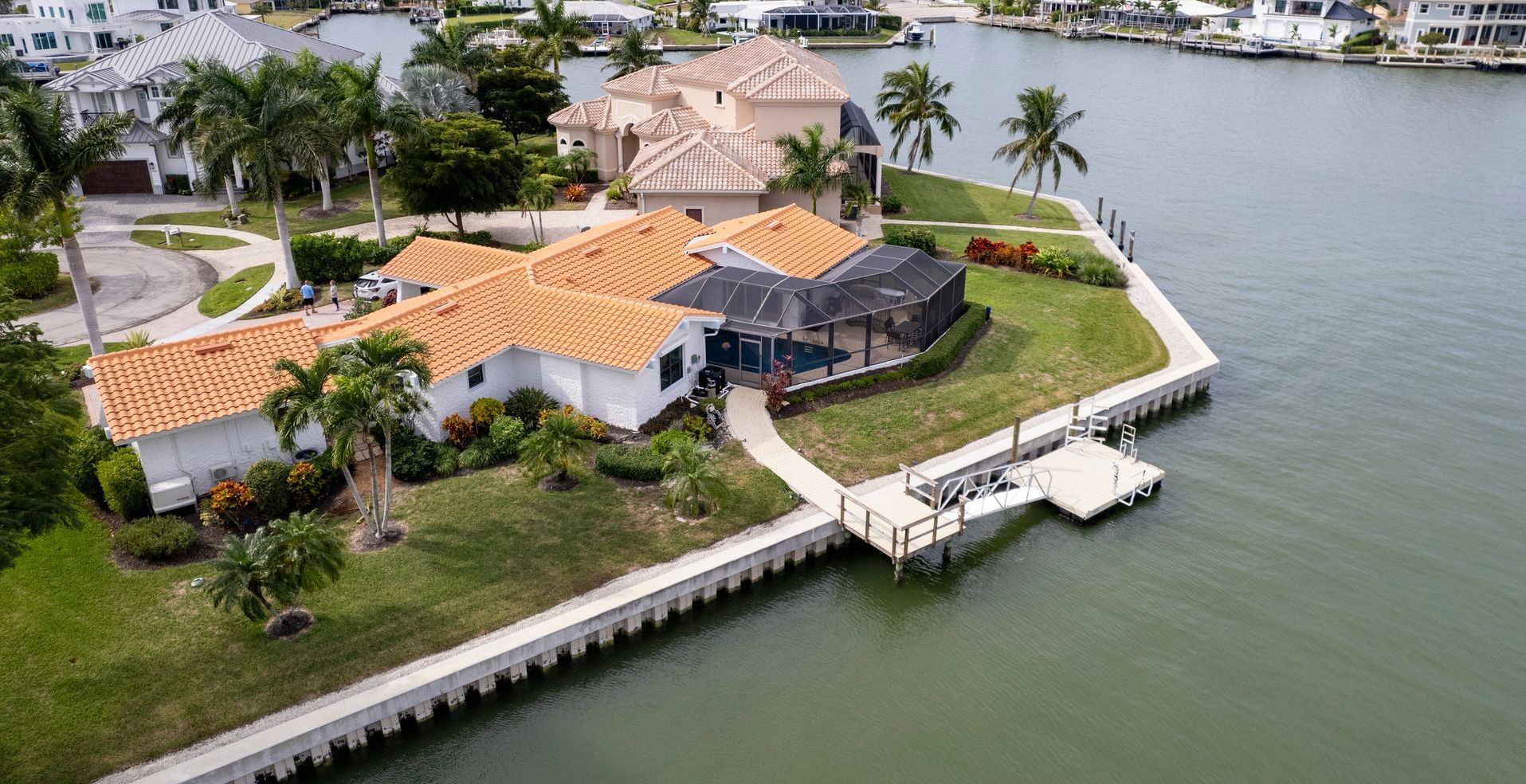
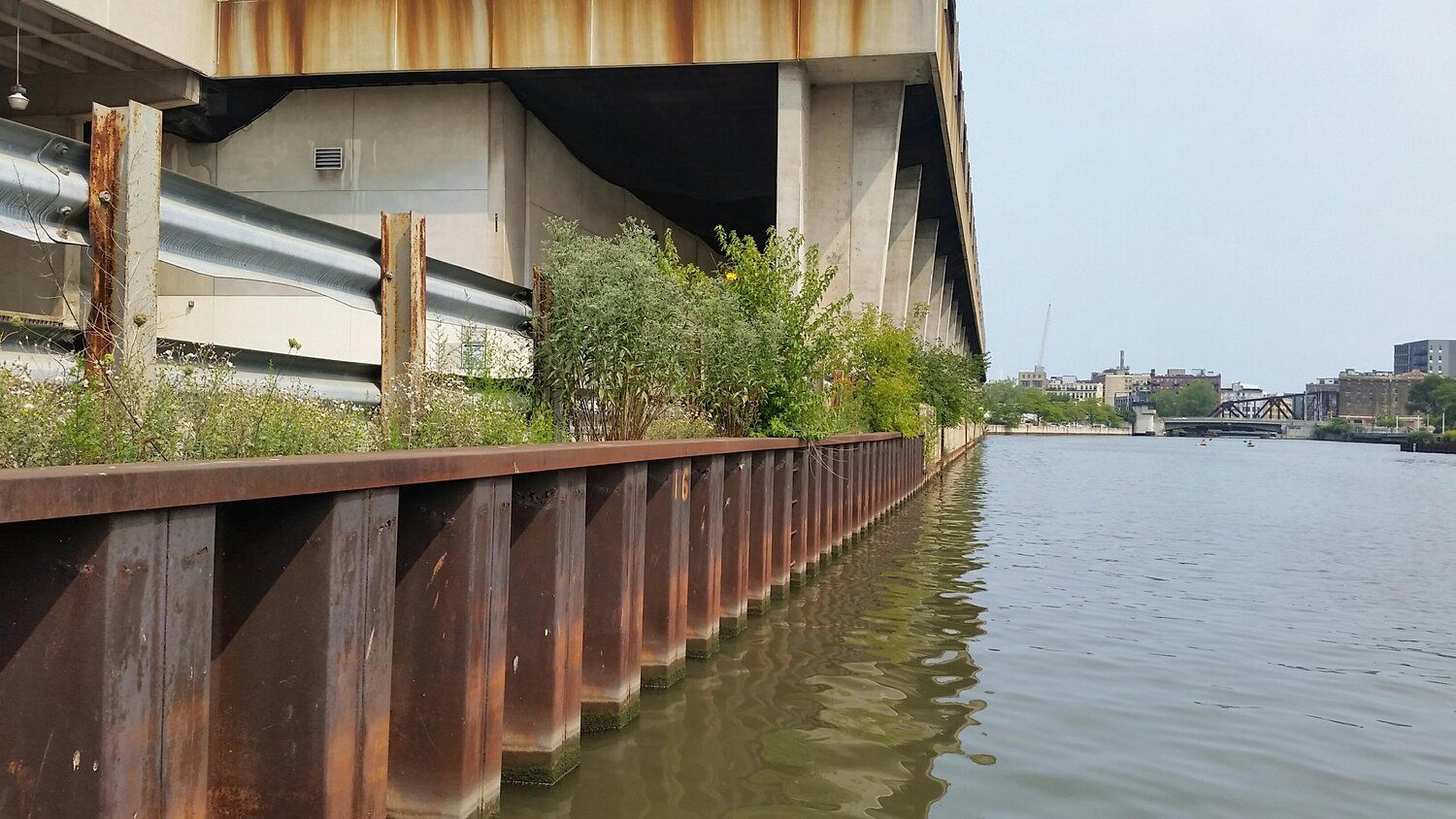
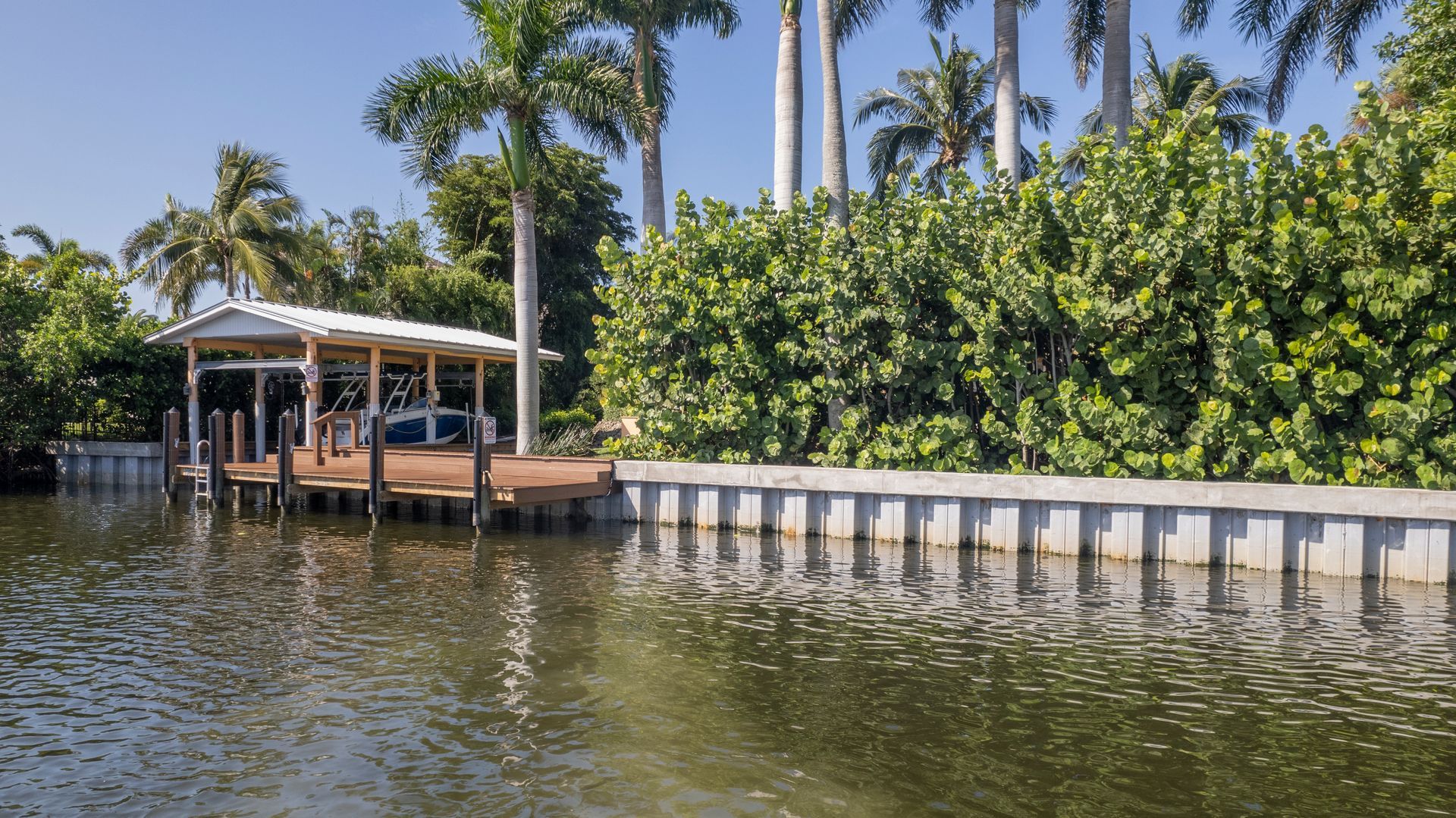
A seawall is a vertical wall - usually made of concrete, steel, or vinyl - built directly at the water's edge. Its job is to act as a hard barrier between the land and the sea. It takes the full force of a wave head-on and reflects that energy back into the water.
Seawalls are the more common choice in urban and suburban waterfront settings. If you've ever walked along Naples Bay or looked out at the docks in Port Royal, you've seen plenty of them. They're clean, compact, and efficient where space is limited.
Why Property Owners in Collier County Lean Toward Seawalls
The tight lot lines and manicured landscapes in communities like Park Shore, the Moorings, and Marco Island make seawalls a natural fit. A vertical wall holds the maximum amount of usable land right up to the water's edge.
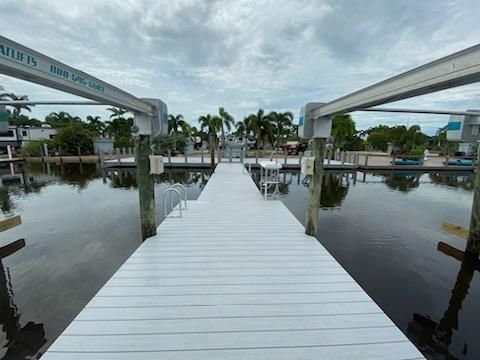
Seawalls also make dock construction straightforward. When you already have a hard, vertical surface along your waterfront, attaching a dock becomes a cleaner engineering job.
That said, seawalls come with trade-offs.
The Downside of a Vertical Barrier
Because a seawall reflects wave energy rather than absorbing it, that energy has to go somewhere. Over time, this can cause scour - the gradual undercutting of the wall's base as water pulls sediment out from beneath it. It's similar in principle to bridge scour, where moving water erodes the soil around a structure's foundation.
A seawall also does little for the intertidal zone. The area between high and low tide, which normally supports a rich habitat for marine life, often disappears behind a hard vertical wall. Coastal management engineers and organizations like the National Park Service have noted these ecological concerns in hard-armoring approaches to shoreline protection.
If the wall fails, it can fail dramatically. That's why seawall inspection and regular maintenance matter so much in a flood-prone, storm surge environment like Southwest Florida.
What Is a Revetment, and When Does It Make Sense?
A revetment is a sloped layer of protective material - riprap, rock, concrete armor units, or even geotextile tubes - placed along the face of a slope to absorb and deflect wave energy. Instead of standing straight up and reflecting a wave, a revetment lets the water run up the slope and dissipate its energy gradually.
Think of a revetment like a natural shoreline that's been reinforced. It works with the water instead of fighting it.
The Advantages of a Sloped Approach
Revetments tend to handle wave overtopping better than seawalls because the sloped face slows the water down before it can crest. In areas with higher wave power or significant fetch - the open distance over which wind and waves can build energy - a revetment often performs more reliably over time.
They're also more forgiving from an ecological standpoint. A properly designed revetment can preserve some of the intertidal zone and support more natural sediment movement along the coast. This aligns with what coastal management professionals call a softer approach to erosion control.
Revetments can incorporate geotextile fabric beneath the rock or armor layer, which helps stabilize the soil underneath while still allowing some water interaction. Geotextile tubes are also used in certain revetment-style installations, especially where conventional rock placement isn't practical.
Where Revetments Fall Short
The biggest issue is space. A revetment needs room to slope. On a tight residential lot in Collier County, that sloped footprint can eat into a usable yard or landscape area. If you're trying to preserve every square foot, a revetment may not be realistic.
Revetments are also harder to pair with docks. You can't easily attach a dock to a pile of riprap, which means additional infrastructure is usually required.
They're generally more natural-looking, which can be a benefit in certain settings - like along more open stretches near Keewaydin Island or Everglades City - but they won't deliver the clean, finished edge that many Collier County homeowners want along their waterfront.
The Key Differences: A Side-by-Side Look
Both structures serve the same ultimate goal - protecting your shoreline from coastal erosion. But they accomplish it differently, and those differences have real consequences for cost, design, and long-term performance.
Profile and space: A seawall stands vertical and takes up minimal horizontal space. A revetment slopes outward and requires more room.- Wave energy handling: A seawall reflects wave energy. A revetment absorbs and dissipates it. In high-energy coastal environments, this distinction matters enormously.
- Ecology and habitat: Revetments tend to be friendlier to marine habitat and natural sediment movement. Seawalls can disrupt the intertidal zone and accelerate localized erosion at their base.
- Construction cost: Seawalls typically involve higher upfront costs due to the materials and engineering required for a vertical structure. Revetments can be less expensive per linear foot, but the larger footprint and material volume can offset that.
- Durability and risk: Both can be built to last, but a failing seawall tends to fail suddenly. A deteriorating revetment usually shows signs of distress more gradually, giving you more time to respond.
How Your Shoreline Decides for You
Here's what coastal engineers and experienced marine construction professionals look at when advising on seawall vs. revetment:
- Wave exposure. Properties on open water with significant wave action - or areas subject to serious storm surge during hurricane season - may benefit from a revetment's energy-absorbing design. Properties in calmer, protected waters often do fine with a seawall.
- Slope of the existing bank. If your shoreline already has a gentle slope with loose soil or sandy sediment, a revetment can work with that existing geometry. If you have a near-vertical bank or a lot of man-made fill, a seawall may be the more practical solution.
- Sea level rise. With sea levels continuing to rise along Florida's coast, the height and design of any coastal structure needs to account for future conditions, not just current ones. This is especially relevant in low-lying areas of Collier County.
- Existing infrastructure. If you already have a dock or plan to build one, a seawall is typically the better foundation. It provides a consistent, solid structure to tie into.
- Budget and timeline. Both options involve real construction cost and permitting time. Understanding the full scope - materials, engineering, environmental review, and long-term maintenance - is essential before committing to either.
What About Beach Nourishment and Dunes?
Some shoreline situations don't call for hard structures at all - or call for them in combination with softer solutions. Beach nourishment, which involves adding sand to replenish an eroding beach, and the protection of dunes as natural breakwater features, are legitimate parts of coastal management strategy.
In practice, many Collier County waterfront properties need a combination approach. A seawall or revetment might anchor the structure, while natural plantings and sediment management help the area around it perform better over time. This kind of layered thinking is where experienced marine construction knowledge really earns its value.
Why Local Experience Matters More Than General Advice
Reading about seawalls and revetments online will only take you so far. The real answer lives in your specific stretch of shoreline - the way the water moves, how storm surge has behaved historically, what the soil composition looks like beneath the surface, and what neighboring properties have done and why.
Kalvin & Calvin Marine Construction has been working along Collier County's waterfront for over 40 years. The team has seen what holds up through hurricane season and what fails quietly over a decade of tidal movement. That kind of hands-on, local knowledge isn't something you find in a general engineering guide.
Whether you're looking at a
residential repair, new construction, or trying to figure out why your existing structure is showing stress, a proper inspection and honest conversation about your options is the right starting point.
Which Shoreline Solution Fits Your Property?
Choosing between a revetment and a seawall isn't about which option sounds better - it's about what your shoreline actually needs. Wave energy, soil type, available space, and long-term goals all play a role. Getting that decision right from the start saves significant time, money, and stress down the road.
If you're unsure where your property stands, start with a professional
seawall inspection. It gives you a clear picture of your current structure and helps you plan the right next step with confidence.