Vinyl Seawall vs Concrete: Why One Outlasts the Other by Decades
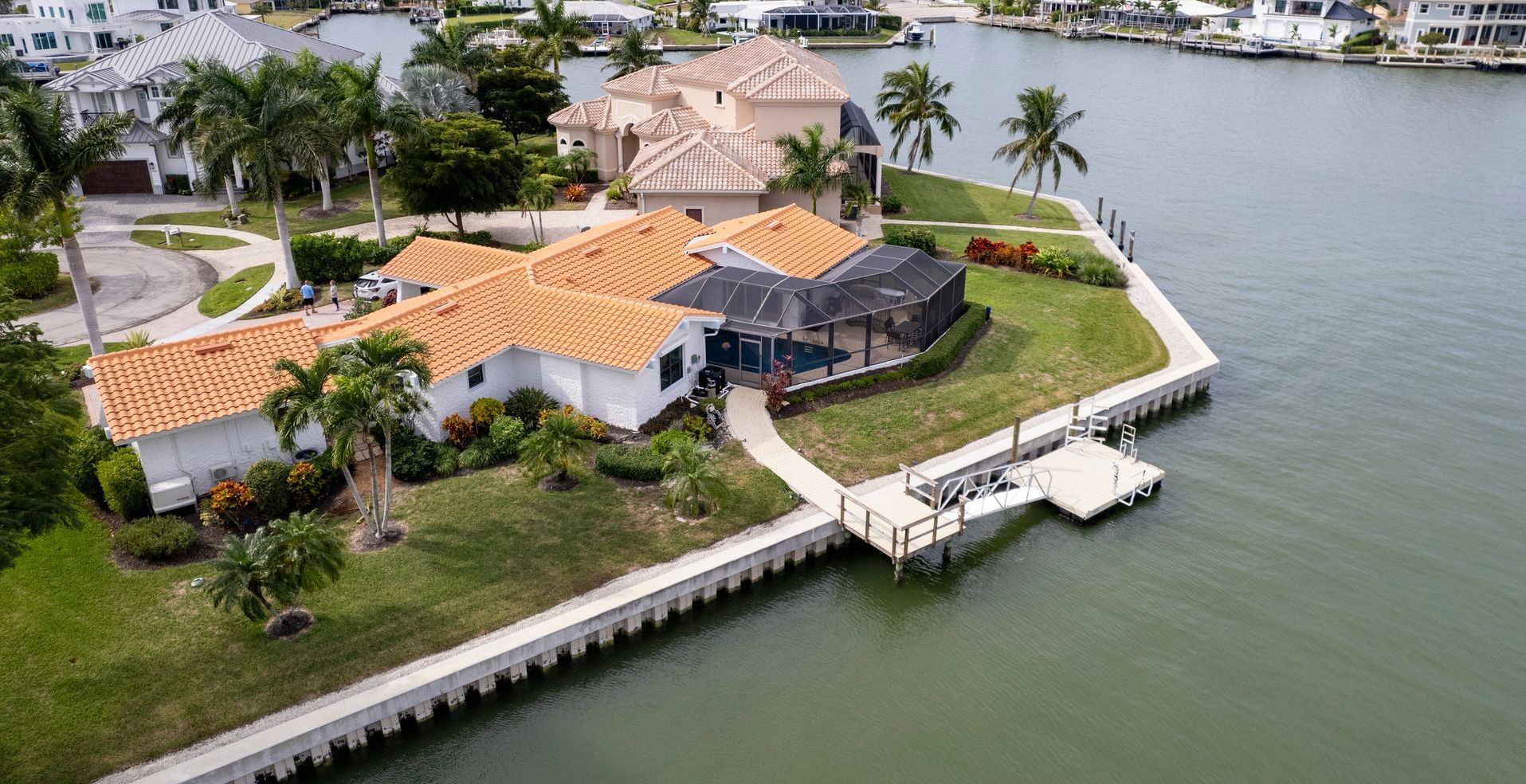
If you own waterfront property in Collier County, Florida, your seawall is one of the most important structures on your land. It holds back erosion, protects your yard and foundation, and keeps the water where it belongs. So when it's time to build or replace one, the material you choose matters more than most people realize.
Two options come up most often: vinyl and concrete. Both work as a bulkhead barrier between your property and the water, but they behave very differently over time.
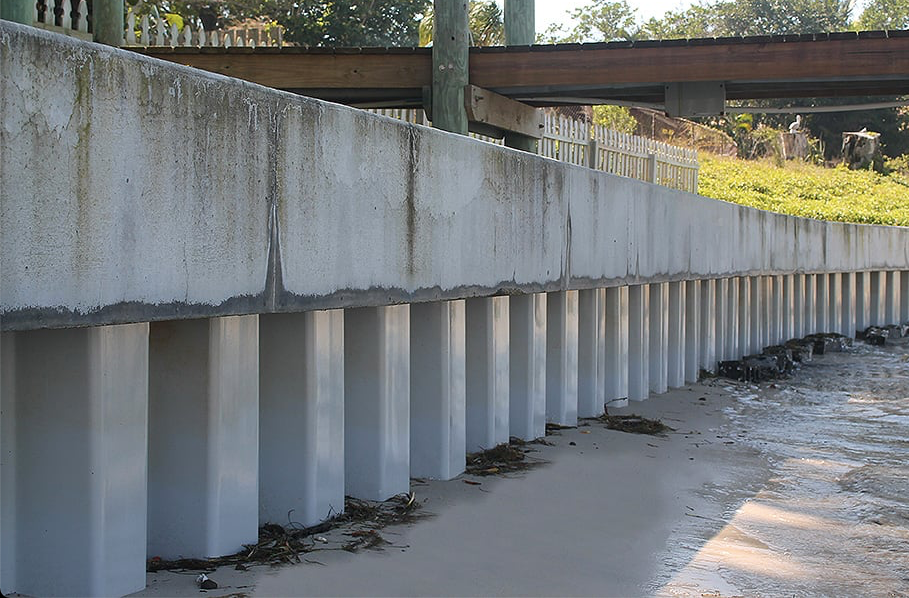
What Makes Concrete Seawalls Struggle in Florida
Concrete has been the go-to seawall material for decades, and for good reason. Reinforced concrete is strong, familiar to contractors, and widely available. But in a marine environment like Southwest Florida, that strength starts working against it.
The problem is what's inside the wall. Reinforced concrete relies on steel rebar to hold its structure together. In saltwater environments, seawater slowly penetrates the concrete and reaches that rebar. Once the steel begins to corrode, it expands, and that expansion cracks the concrete from the inside out.
By the time you see visible damage on a concrete wall, the internal deterioration is often already serious. Repairs are expensive, and in many cases, full demolition and replacement become unavoidable.
The Salt, the Steel, and the Clock
Corrosion isn't a maybe in Florida - it's a when. The combination of seawater, heat, and humidity creates ideal conditions for rust to take hold of steel reinforcement. Most concrete seawalls in this region begin showing signs of stress within 20 to 30 years, sometimes sooner depending on water conditions and original construction quality.
Retaining wall failures along the waterfront often trace back to this exact sequence: water intrusion, rebar rust, concrete cracking, structural compromise.
Why Vinyl Seawalls Hold Up Longer
Vinyl seawalls, more specifically hybrid systems built with high-quality polyvinyl chloride (PVC) sheeting, take a different approach to the corrosion problem. Rather than leaving steel-reinforced concrete exposed to saltwater, these systems form the concrete inside a protective vinyl shell. The vinyl casing keeps water from ever reaching the steel, which stops the rust-and-crack cycle before it starts.
The concrete core still provides the load-bearing strength Florida seawalls need. The vinyl exterior is what changes the equation, acting as a permanent barrier against the saltwater intrusion that destroys unprotected concrete over time.
TRULINE and Everlast: What the Industry Uses
Not all vinyl products are equal. Brands like TRULINE and Everlast are recognized industry standards used in professional marine construction. These products are engineered specifically for bulkhead and seawall applications, offering high tensile strength and long-term resistance to saltwater, UV exposure, and marine habitat conditions.
TRULINE, for example, builds an 8-inch steel-reinforced concrete wall inside a protective vinyl form. According to manufacturer specifications, a properly designed and installed wall using this system can achieve a design life of 75 years or more, with the vinyl parts themselves backed by a 50-year limited warranty. That's a significant advantage over exposed concrete in a saltwater environment.
Some installations also incorporate Helicon piling systems, which provide additional structural support.
Comparing the Two Side by Side
When you look at both materials in the context of Florida waterfront construction, a few key differences stand out.
Vinyl requires no painting, no patching of spalled concrete, and no concern about internal corrosion. Concrete walls, by contrast, often require repeated repairs as the rebar inside continues to rust and the wall continues to crack. Over a 30-to-50-year horizon, vinyl typically wins on total cost of ownership.
Concrete does have some advantages - it's better suited for certain heavy-load applications, and some waterfront designs call specifically for a traditional look. But for
residential seawalls along Naples Bay, Marco Island, and the surrounding waters of Collier County, vinyl has become the preferred material for a reason.
What This Means for Your Property
If your existing concrete seawall is showing cracks, leaning, or signs of erosion behind the wall face, don't wait for the problem to get worse. Early seawall inspection can catch issues before they become full replacement jobs.
If you're building new, it's worth having a real conversation about materials before construction begins. The right wall isn't just the one that looks good today - it's the one that's still standing and functioning 40 years from now.
Why Vinyl Seawalls Outlast Concrete in Collier County
Choosing between vinyl and concrete comes down to one simple question: which material holds up in seawater over the long haul? In Collier County's marine environment, vinyl-protected systems consistently outlast exposed concrete, mostly because the vinyl shell keeps saltwater away from the steel-reinforced concrete inside, stopping the corrosion cycle before it can start.
If you're due for a
seawall inspection or considering new construction, the team at
Kalvin & Calvin Marine Construction has over 40 years of hands-on experience helping waterfront property owners make the right call. Reach out at (239) 280-6054 to
schedule an inspection.