How Long Do Boat Lift Cables Really Last
If you own a boat lift in SW Florida, you have probably wondered at some point whether those cables are still trustworthy. It is a fair question. The saltwater environment here is brutal on metal, and the last thing you want is your boat crashing into the water because a cable gave out without warning.
The honest answer is that boat lift cables do not last forever, and how long they last depends on more than just time.
What Boat Lift Cables Are Actually Made Of
Most boat lift systems use wire rope, a bundle of steel strands twisted together to handle the weight of lifting and lowering a vessel repeatedly. The two most common materials are galvanized steel and stainless steel.
Galvanized wire rope gets a zinc coating to slow down rust and corrosion. Stainless steel wire rope skips the coating and relies on the alloy itself to resist salt and moisture. Both options have their strengths, but neither is immune to the effects of seawater over time.
The Average Lifespan of Boat Lift Cables
Here is the realistic range most marine professionals work with:
- Galvanized wire rope in a saltwater environment typically lasts 3 to 7 years before showing significant wear or failure risk.
- Stainless steel wire rope can last 7 to 10 years or longer, depending on maintenance and conditions.
- In fresh water environments, cables often outlast those used in saltwater by several years because corrosion builds up far more slowly.
These are averages, not guarantees. A cable that runs over a worn pulley, sits in standing water, or never gets lubrication can fail well before the low end of those ranges. A cable that is inspected regularly and properly maintained can exceed them.
What Actually Kills a Boat Lift Cable
Corrosion From Salt Exposure
This is the biggest culprit in coastal areas. Seawater works its way into the small gaps between wire strands, and once rust takes hold from the inside out, there is no reversing it. The cable may look fine on the outside while it is quietly failing within.
Florida's marine environment accelerates this process significantly. The combination of salt air, humidity, and direct water contact puts cables here under constant stress that cables in inland freshwater settings simply do not face.
Friction and Mechanical Abrasion
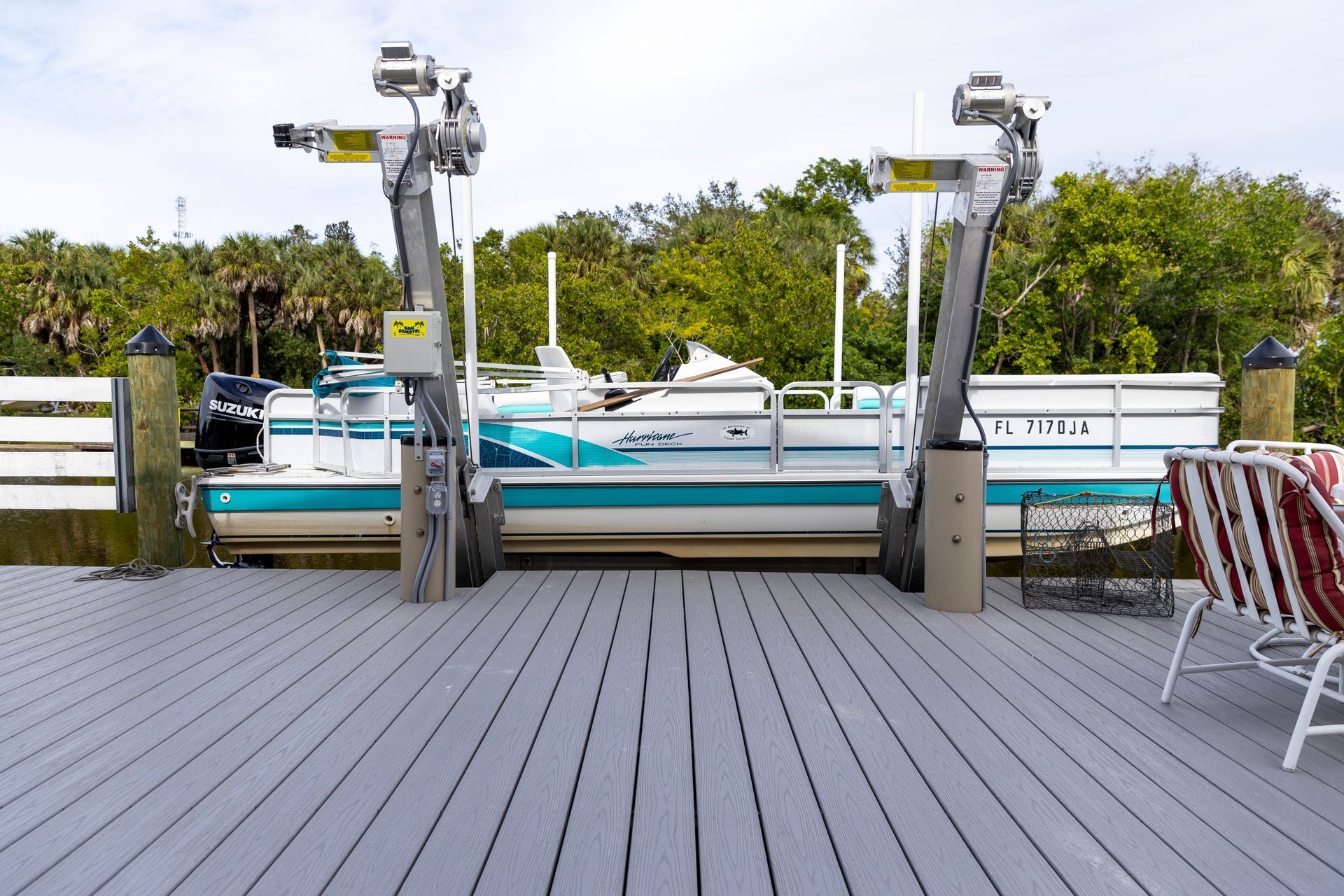
Every time the boat lift raises or lowers your vessel, the wire rope bends around a drum or pulley. Over thousands of cycles, that repeated bending creates friction and abrasion against both the cable itself and whatever surface it contacts. This breaks down individual wire strands one by one.
A drum or pulley that is not aligned properly or is the wrong size for the cable diameter makes this wear happen even faster. The cable essentially grinds itself down with each use.
Lack of Lubrication
Wire rope needs lubrication to stay healthy. Without it, the strands rub against each other with every load cycle, generating heat and accelerating wear from the inside out. A light coating of grease or penetrating oil pushed into the cable's core makes a real difference in longevity.
Many boat owners skip this step entirely, which is understandable since it is not obvious. But it is one of the easiest ways to extend cable life without spending much money.
Overloading
Every cable has a rated load limit. Exceeding it even occasionally stretches the wire rope beyond its design tolerances and weakens the internal structure. This is not always dramatic - the cable may not snap immediately, but the damage is done, and failure becomes more likely with each subsequent use.
How to Spot a Cable That Is Close to Failing
You do not need special tools to catch early warning signs. A visual inspection and a pair of gloves are usually enough.
Run a gloved hand slowly along the length of the cable. Broken wires will snag on the fabric.
Look for:
- Visible rust or discoloration along any section of the wire
- Kinks, bends, or flat spots that do not spring back
- Fraying or bird-caging, where the strands separate and puff outward
- Uneven tension between the cables on a multi-cable lift
Any one of these signs is reason enough to replace the cable before your next use. Price is a poor excuse to delay when the alternative is a dropped boat or, worse, an injury.
How Often Should You Inspect Your Boat Lift Cables?
A thorough inspection every six months is a reasonable minimum in a saltwater environment like SW Florida. Ideally, you or a qualified marine professional should look things over at the start and end of boating season, and any time the lift behaves unusually - grinding sounds, uneven lifting, or visible sag in the beam or frame.
Annual lubrication with a marine-grade grease or penetrating oil is also worth adding to your maintenance calendar. It takes maybe thirty minutes and costs far less than an emergency cable replacement.
Does Cable Material Change the Maintenance Schedule?
Stainless steel wire rope is often marketed as low-maintenance, and compared to galvanized steel, that is somewhat true. But stainless steel is not corrosion-proof. It is corrosion-resistant. In a high-salt environment, it still needs regular inspection and occasional lubrication to reach its potential lifespan.
Galvanized cable is more affordable upfront and still performs well when maintained. The zinc coating eventually wears away, especially around the drum and pulley contact points, so those areas need extra attention during inspections.
How to Keep Your Boat Lift Cables Going Strong
Boat lift cables in a saltwater environment like Collier County typically last anywhere from three to ten years, depending on the material, how the lift is used, and how well the cables are maintained. Regular inspection, proper lubrication, and replacing worn hardware like pulleys and drums all play a role in keeping your lift safe and reliable.
If you are also dealing with
dock repairs or waterfront concerns alongside your boat lift maintenance, our dock building services can help.
Call us at (239) 280-6054 to get started.